























Free printable
Home inventory checklist (free PDF)
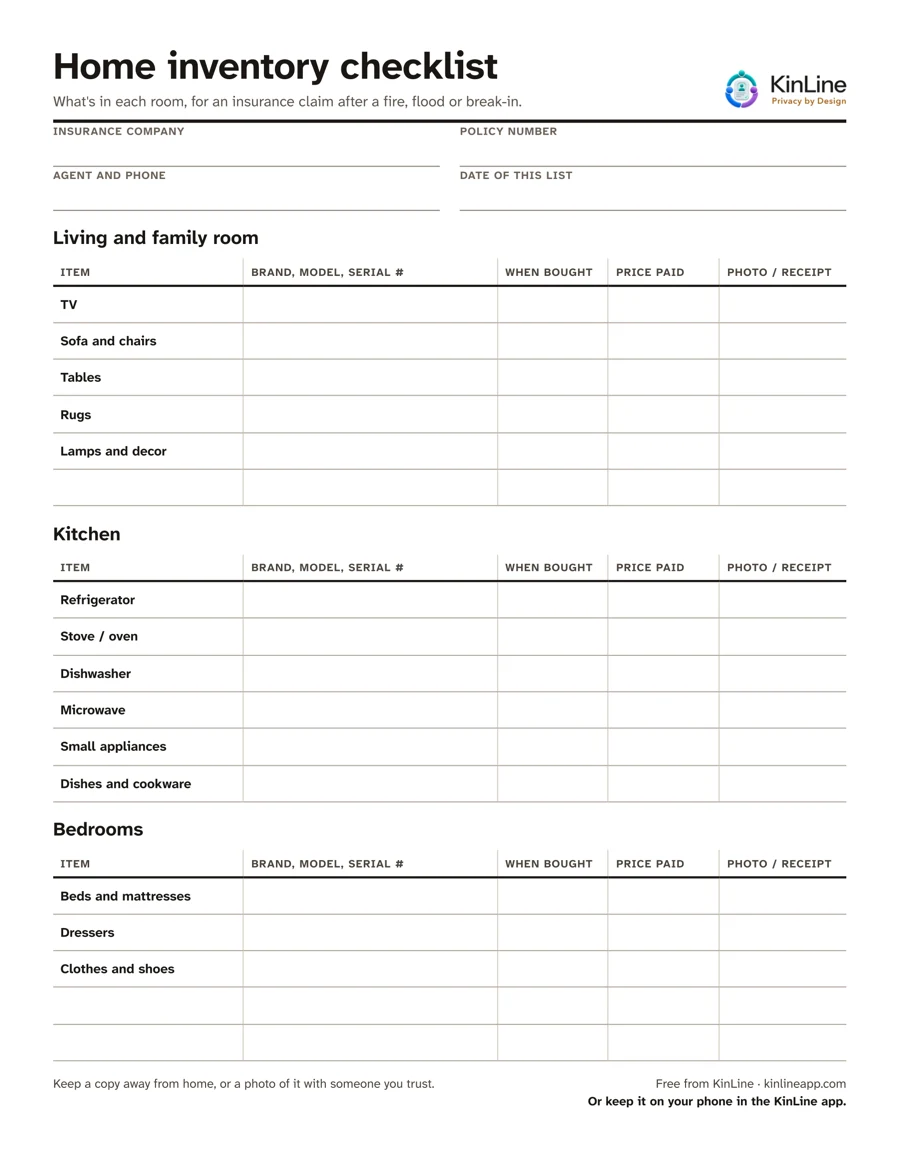
Download the free two-page PDF below, in US Letter or A4, and print it. It goes room by room, with space for each item's brand, serial number, date bought and price. After a fire, a flood or a break-in, the insurance company asks what you lost. This list is your answer.
By the KinLine team · Updated
Download the PDF
Two pages, room by room. Keep a copy away from home.
Free. No sign-up, no email.
What's on it
- Your policy: insurance company, policy number, agent and the date of the list.
- Room by room: living room, kitchen, bedrooms, electronics, garage and outdoors.
- Valuables: jewelry, art and collectibles.
- For each item: brand, model and serial number, when you bought it, what you paid, and whether you have a photo or receipt.
Home inventory list: what to write down in each room
- Living room: TV, sofa and chairs, tables, rugs, lamps, pictures and decor
- Kitchen: refrigerator, stove, dishwasher, microwave, small appliances, dishes and pots
- Bedrooms: beds and mattresses, dressers, clothes and shoes (count them by kind, like "5 pairs of jeans")
- Electronics: laptops, phones, tablets, printer, cameras, game consoles
- Garage and yard: lawn mower, tools, bikes, grill and patio furniture
- Valuables: jewelry, watches, art and collectibles, with any appraisal
- Easy to forget: closets, the attic, the basement, the laundry room and a storage unit
The list also shows how much your things are worth, so you can check you have enough insurance.
How to fill it in
- Go room by room. Don't forget closets, the attic, the basement and the garage.
- Find the serial number on the back or bottom of TVs, computers and appliances. Write it down or take a photo of it.
- Take photos of each room, or a slow video, saying what each thing is.
- Keep receipts and appraisals with the list. Write down where you bought each thing, if you remember.
- Most policies only cover a small amount for jewelry and collectibles. Ask your agent if they need their own coverage.
- Keep a copy away from home, with a relative or at work. It belongs in your family emergency binder too. Add to it when you buy something big.
The big things, on your phone
Here's James, from our sample family.
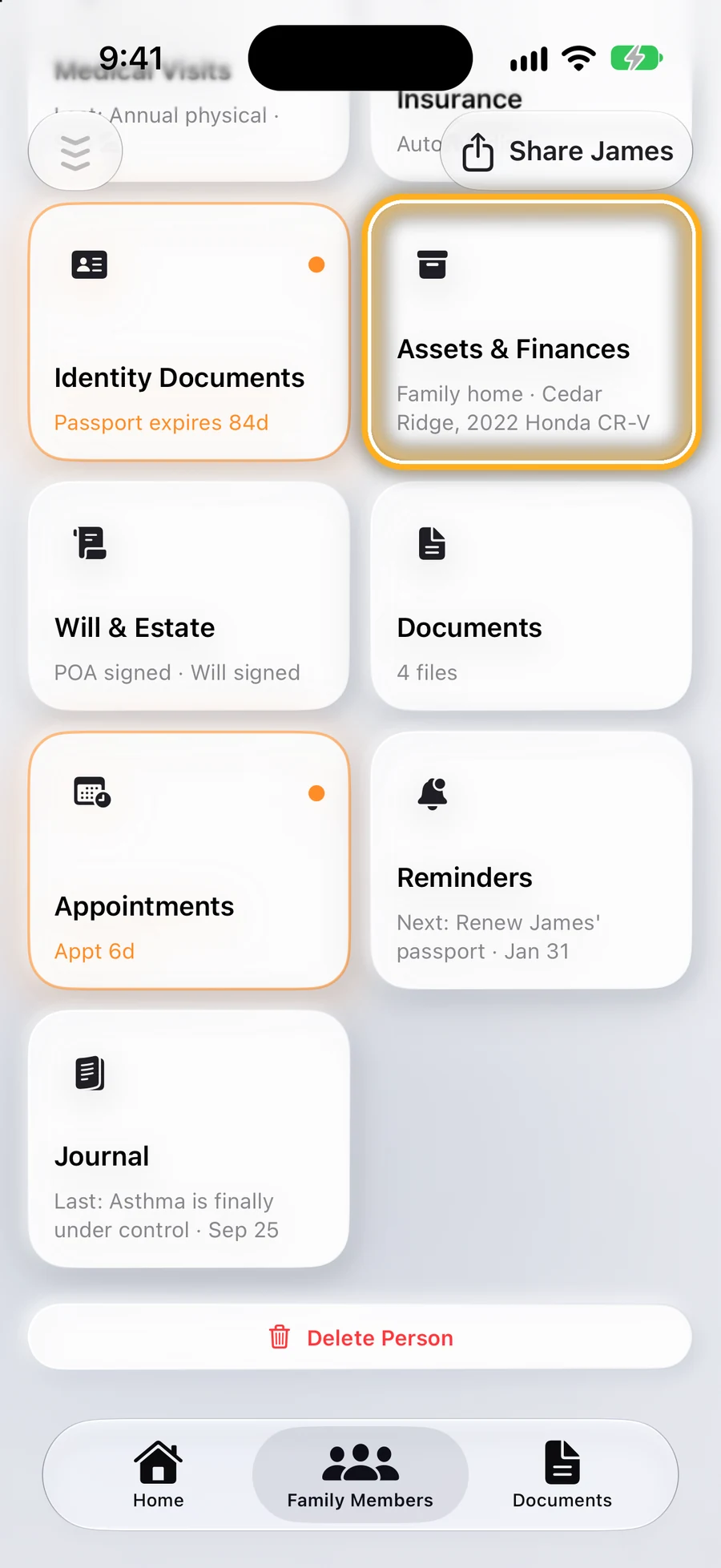
Step 1: Open the person, tap Assets & Finances
The home, the car, jewelry, electronics and bank accounts each go on the person who owns them.
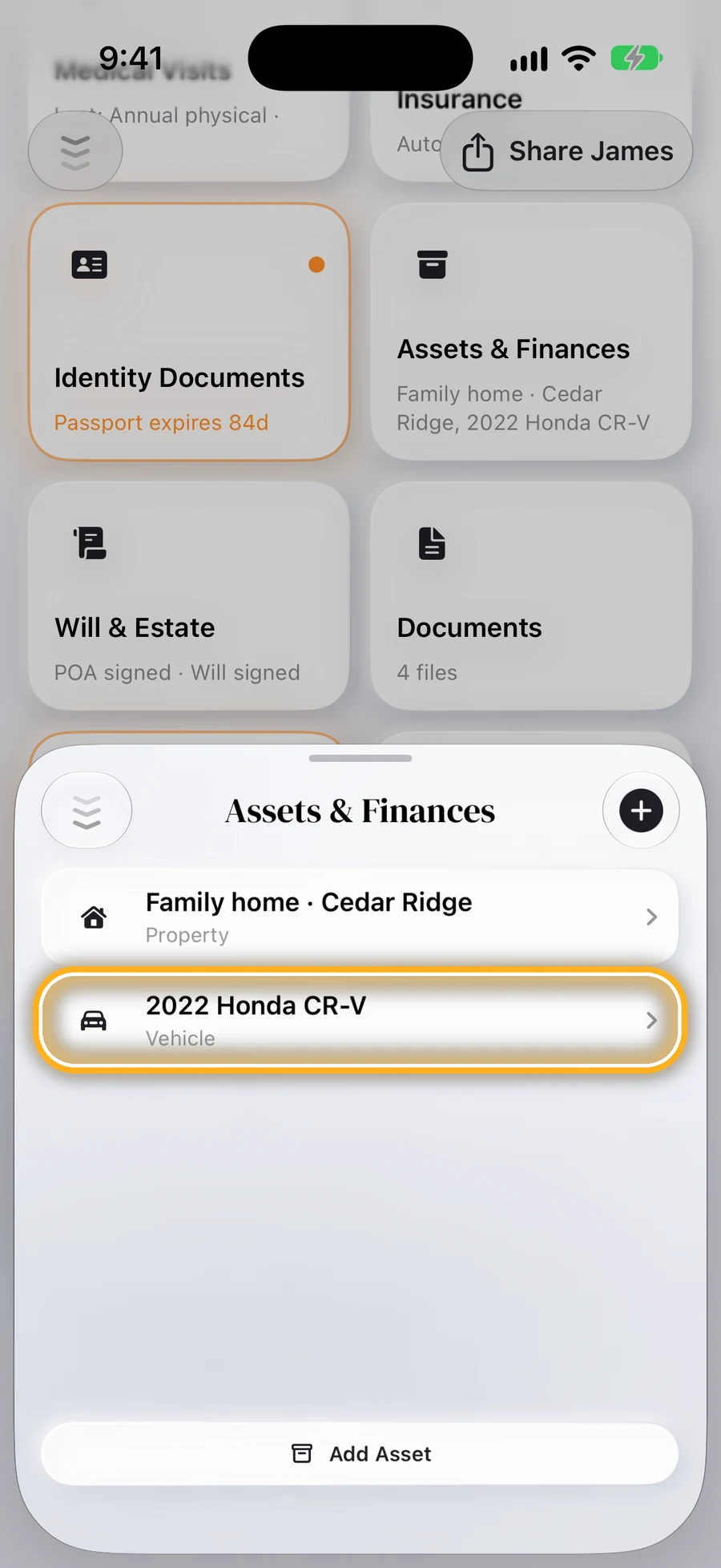
Step 2: Tap Add Asset, or open one
Pick the type: property, vehicle, jewelry, electronics or bank. Add the receipt and a photo.
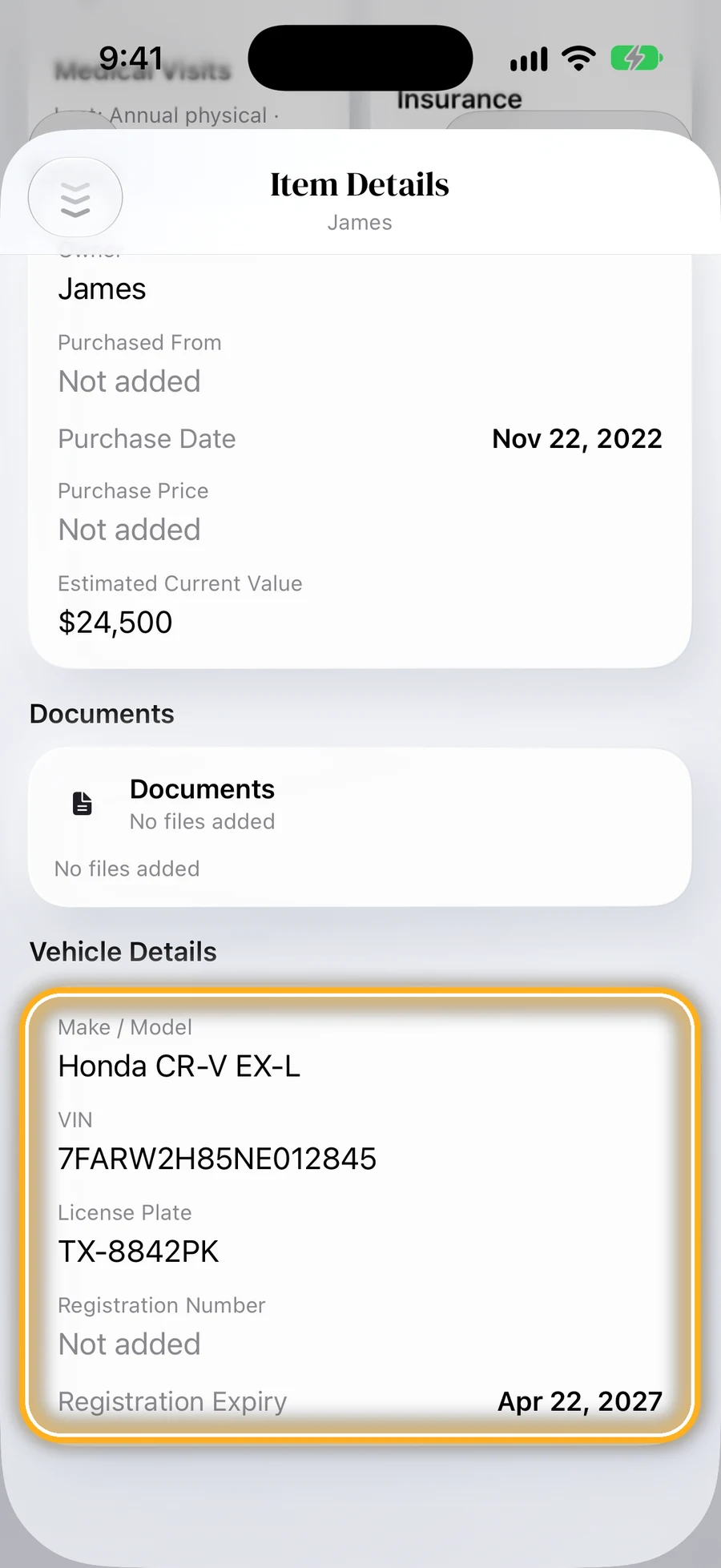
Step 3: Serial numbers and dates, kept safe
For a car: the VIN, the plate and when the registration runs out. The list goes where you go, not in a drawer at home.
Quick questions
- Why make a home inventory?
- After a fire, flood or break-in, it's hard to remember everything you owned. A list with prices and photos makes the insurance claim faster, and shows whether you have enough coverage.
- Do I need receipts for everything?
- No. Write down what you know: what it is, the brand, roughly when you bought it and what you paid. Add a receipt or a photo when you have one.
- Do I have to list every shirt?
- No. The Insurance Information Institute suggests counting clothes by kind, like "5 pairs of jeans, 3 pairs of sneakers", and writing down only the costly pieces one by one.
- It feels like too much. Where do I start?
- Start with one small spot, like the kitchen cabinet with the small appliances, or with things you bought recently. A list that's half done is far better than none.
- Is a video of the house enough?
- It helps a lot. The California Department of Insurance suggests walking through each room, opening drawers and saying what each thing is. Keep the video away from home too.
- Where should I keep the list?
- Somewhere a fire or flood can't reach: a copy with a relative, at work, or in a safe deposit box.
- Is it really free?
- Yes. Both pages, Letter and A4. No sign-up, no email.
Read next
Sources
- California Department of Insurance: Home Inventory Guide (PDF)
- Triple-I (Insurance Information Institute): How to create a home inventory
- Maine Bureau of Insurance: Taking a home inventory
This page is general information, not insurance or financial advice. Ask your insurance agent about your own policy.
Twenty minutes now. A much easier claim later.
KinLine is free to start. No account, no sign-up.


Free to download · No account needed