


Checklist · About 4 minutes
What to bring to the ER
In an emergency, call 911 first. Then, if there's a minute, grab these. The most important one isn't a card at all: it's the list of medicines and allergies.
By the KinLine team · Updated
Papers
- Photo ID: driver's license, state ID or passport
- Health insurance card, and Medicare card if they have one
- Advance directive, living will or power of attorney, if there is one
Information staff will ask for
- Every medicine, with dose and how often, including vitamins and supplements
- Allergies and what happens
- Health conditions and recent surgeries
- Doctors' names and phone numbers, and the pharmacy
- Who to call: an emergency contact
No list yet? Use our free printable medication list, or keep it in KinLine (below).
Things that make a long wait easier
- Phone and charger
- Glasses, hearing aids, dentures
- A sweater and a snack for whoever is waiting
- For a child: a favorite toy or blanket
Leave at home
Jewelry, extra cash and anything valuable you don't need.
All the information, ready on your phone
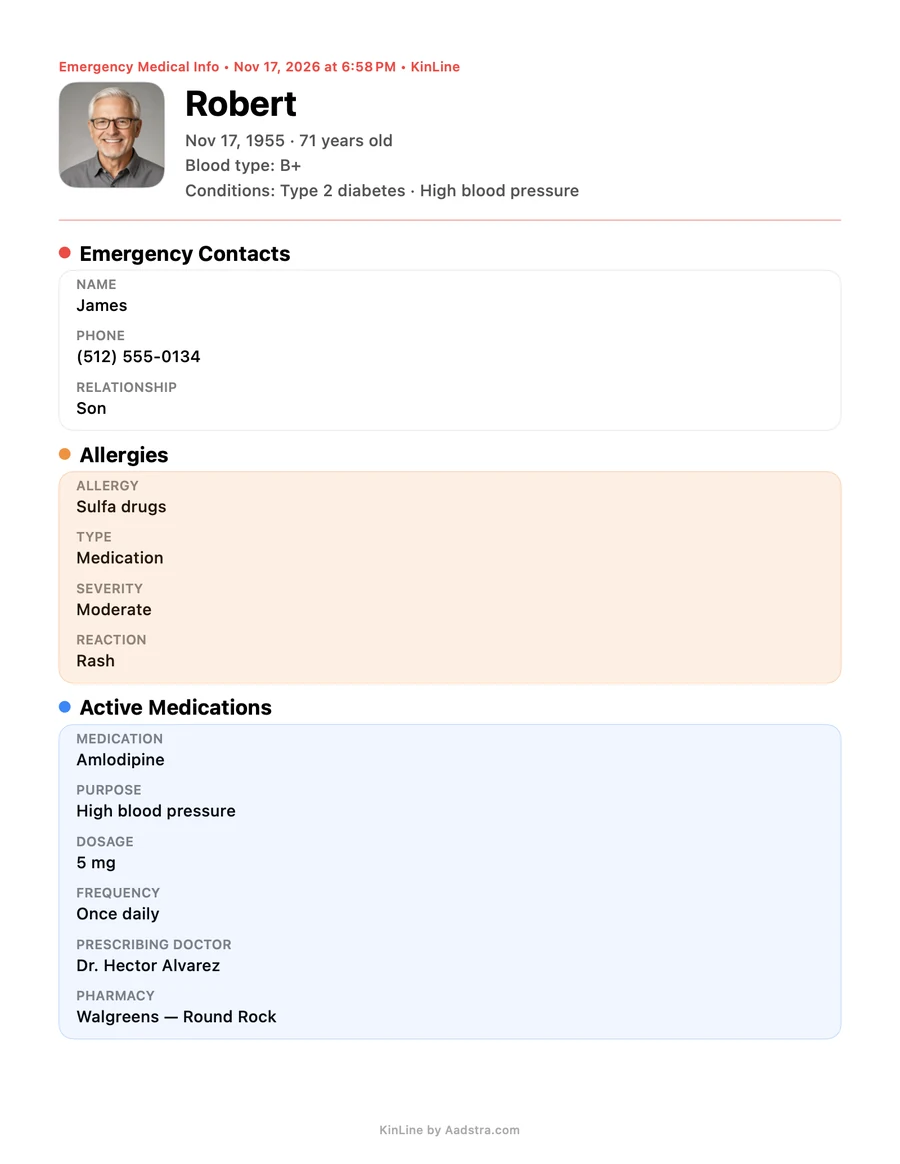
Papers can be grabbed in a hurry. Remembering every medicine can't. In KinLine, each person's Emergency Info holds it, and on iPhone you can hand it over as one page. Here's Robert, from our sample family.
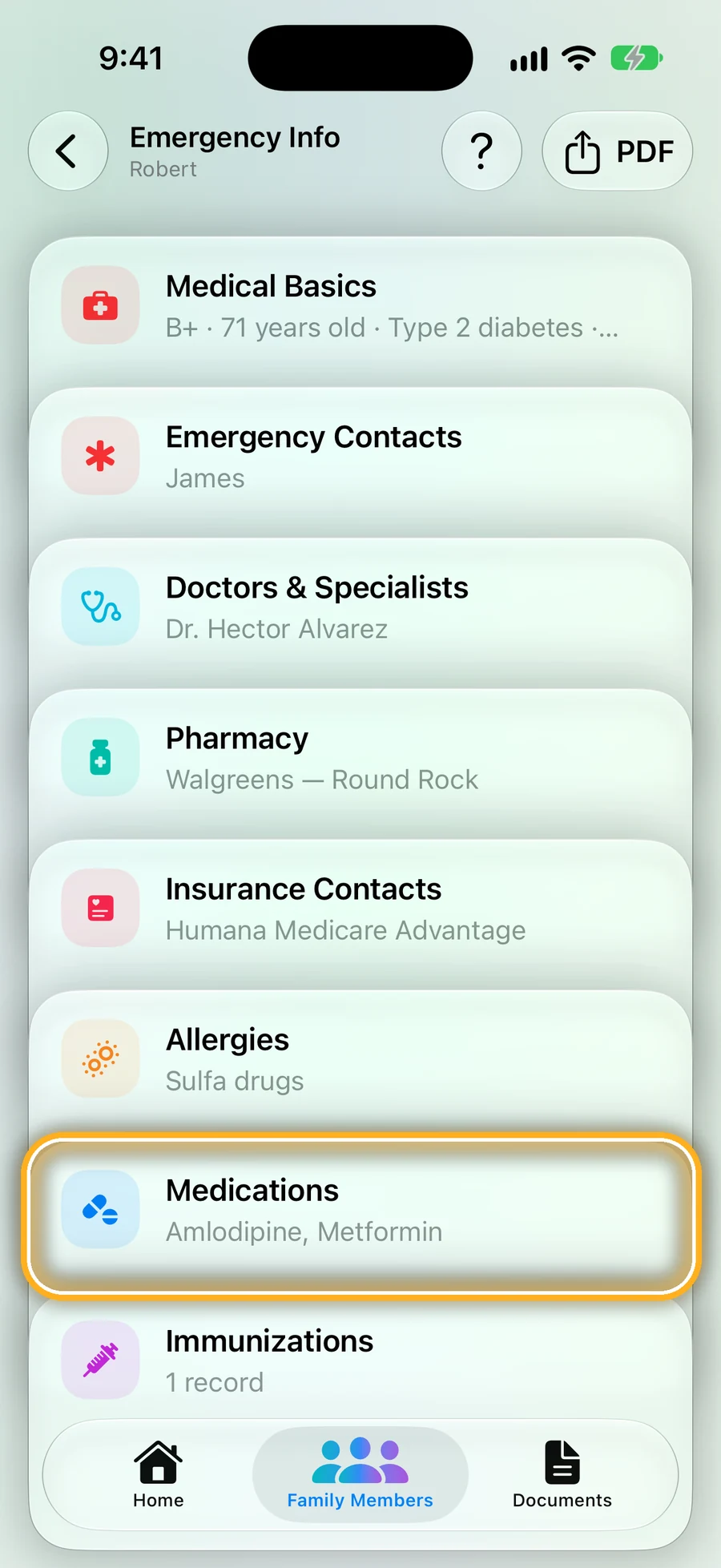
Step 1: Everything a nurse asks, in one place
Open the person and tap the red Emergency Info button: blood type and conditions, who to call, doctors, pharmacy, insurance, allergies, medicines and shots.
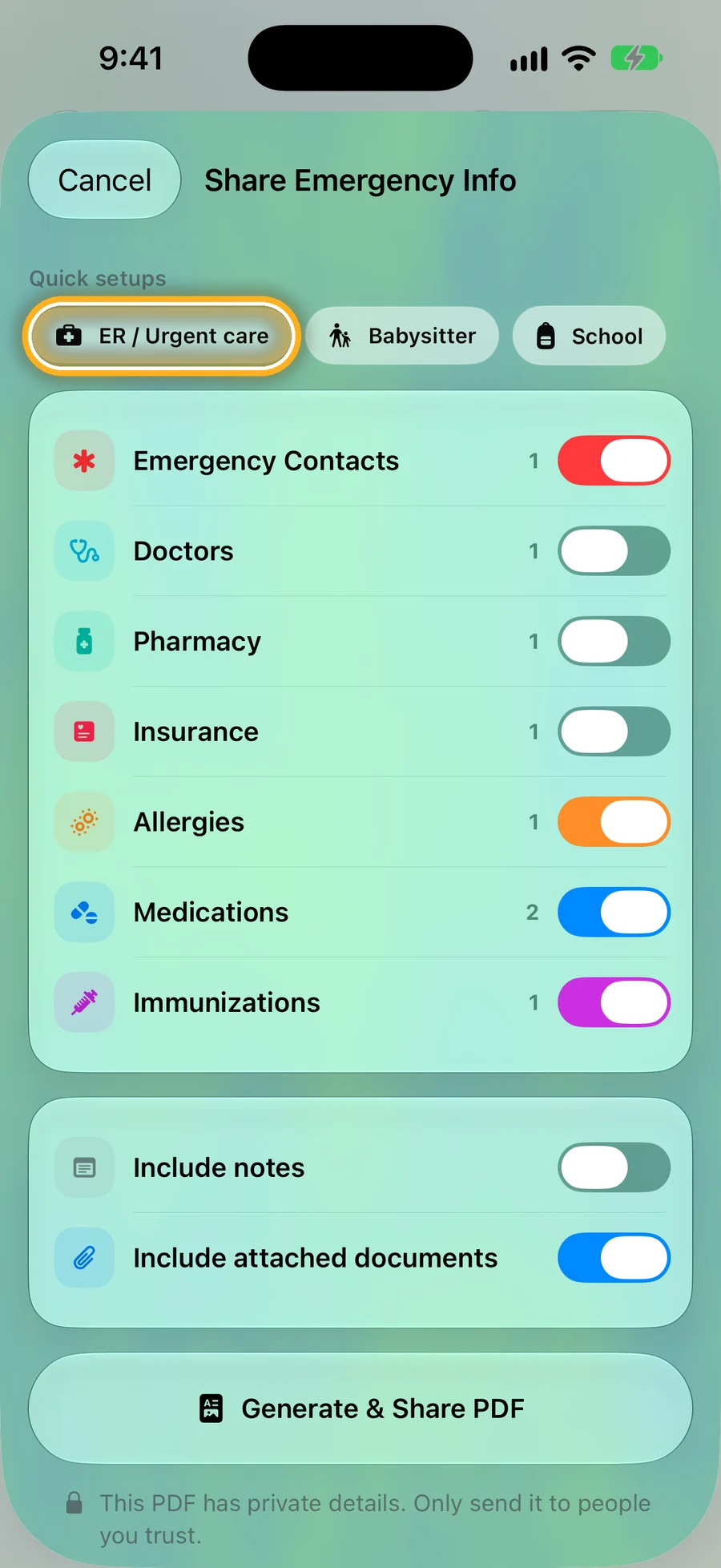
Step 2: Tap PDF, then ER / Urgent care
KinLine picks what the ER needs: emergency contacts, allergies, medicines and shots. Tap Generate & Share PDF and send it by Messages or email, or print it. On iPhone.
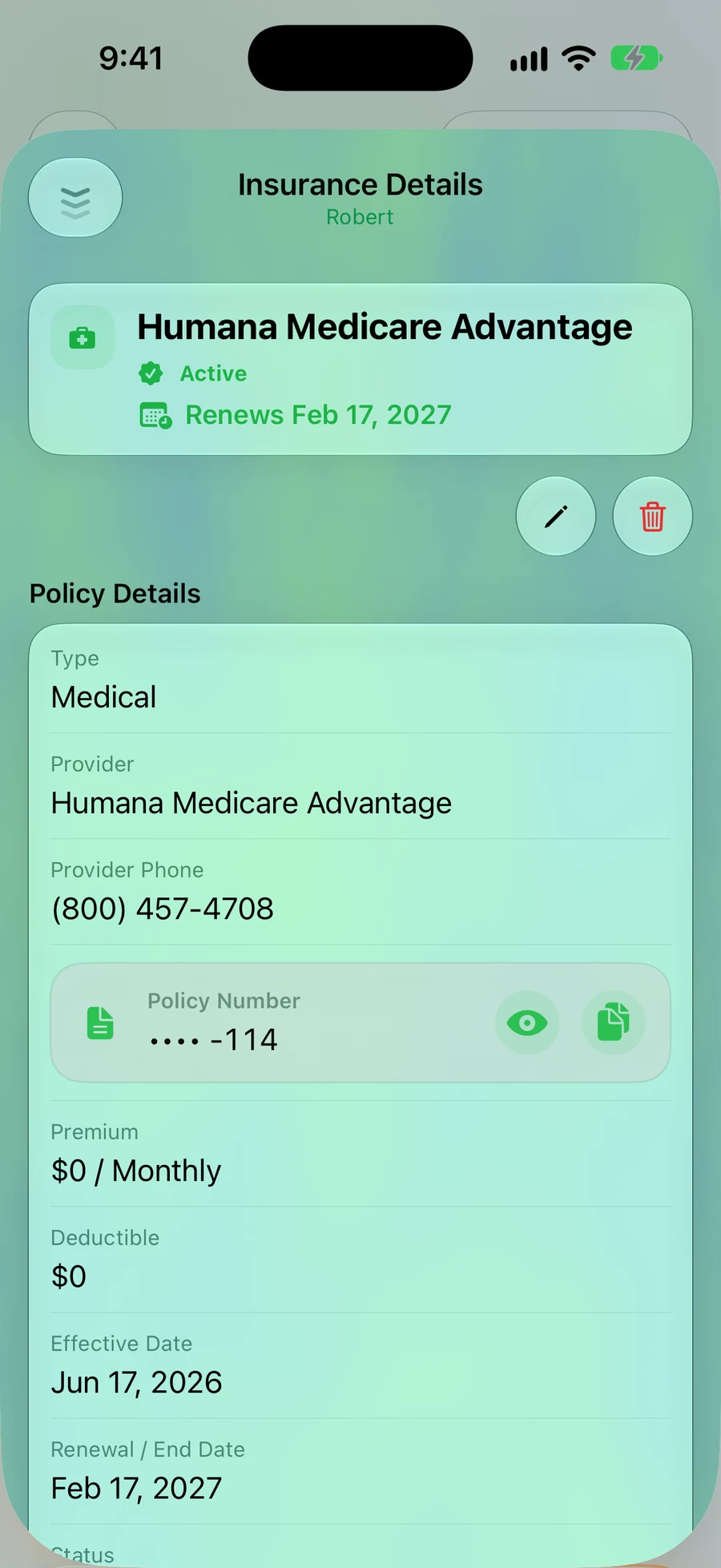
Step 3: Insurance details, one tap away
Forgot the card? The policy, member number and phone are on his Insurance card in KinLine, with a photo of the card if you added one.
Quick questions
- Will the ER see me without my insurance card?
- Yes. In the US, a federal law called EMTALA means emergency rooms at hospitals that take Medicare, which is nearly all of them, must check and stabilize anyone who comes in, whether or not they have insurance or can pay. Bring the card if you can, because billing is easier.
- What's the most important thing to bring?
- An up-to-date list of medicines and allergies. Staff ask for it right away, and it's the thing people most often can't remember under stress.
- What should I bring for an elderly parent?
- Their photo ID, insurance and Medicare cards, medicine list, allergies, doctors' names, any advance directive or power of attorney, plus glasses, hearing aids and a phone charger.
- What should I leave at home?
- Jewelry, large amounts of cash and other valuables. Bring only what you need.
Read next
Sources
- CMS: Emergency Medical Treatment & Labor Act (EMTALA)
- FDA: Create and keep a medication list for your health
This page is general information, not medical advice. Ask a doctor, nurse or pharmacist about your own situation.
Have it ready before you need it.
KinLine is free to start. No account, no sign-up.


Free to download · No account needed