























Guide for families · About 5 minutes
Questions to ask your parents, while you can
One day you'll want to know how they met, what their parents were like, and what they were afraid of as kids. Ask now, and keep their answers in their own voice.
By the KinLine team · Updated
Before you start
- Ask if you can record. Tell them who it's for: you, the grandkids, the whole family.
- Bring old photos, letters or a family recipe. They bring back stories fast.
- Test the recording first. Say their name, the date and where you are, then play it back.
- Keep it short. Half an hour is plenty. Stop when they're tired.
The questions
Questions that start with "how", "what" or "why" get better answers than yes-or-no ones. Pick a few. You don't need them all.
Growing up
- What was the house you grew up in like? Which room do you remember best?
- What did your family do on a Sunday?
- Who was your best friend, and what did you get up to?
- What did you want to be when you grew up?
- What were you afraid of as a child?
Work and getting started
- What was your first job, and what did it pay?
- How did you end up doing the work you did?
- What's something you made or did that you're proud of?
- What was the hardest money year, and how did you manage?
Love and family
- How did you two meet? Who asked whom out?
- What was your wedding day like?
- What do you remember about the day I was born?
- How did you choose my name?
- What did I do as a kid that drove you crazy?
The family before us
- What were your parents like? And their parents?
- Where did our family come from, and why did they move?
- Is there a recipe, a song or a saying that's been in the family a long time?
- Who in the family had the best stories?
Looking back
- What was the hardest time of your life? How did you get through it?
- What changed the most in the world since you were young?
- What do you wish you'd known at my age?
- What do you hope your grandchildren know about you?
While they talk
- Ask "Can you give me an example?" or "What happened next?"
- Don't rush the quiet. They're remembering.
- Don't keep stopping the recording. It can feel like some parts don't matter.
- If they head somewhere you didn't plan, follow them.
Afterwards
Label each recording with the name, date and place. Send them a copy, and say thank you. While you're talking, it's also a good time to ask where the important papers are, and which company holds any life insurance. Families who don't know have to find a life insurance policy after a death the hard way. Our free printable has a page for that.
Keep their stories with their name on them
Here's Robert, 71, from our sample family.
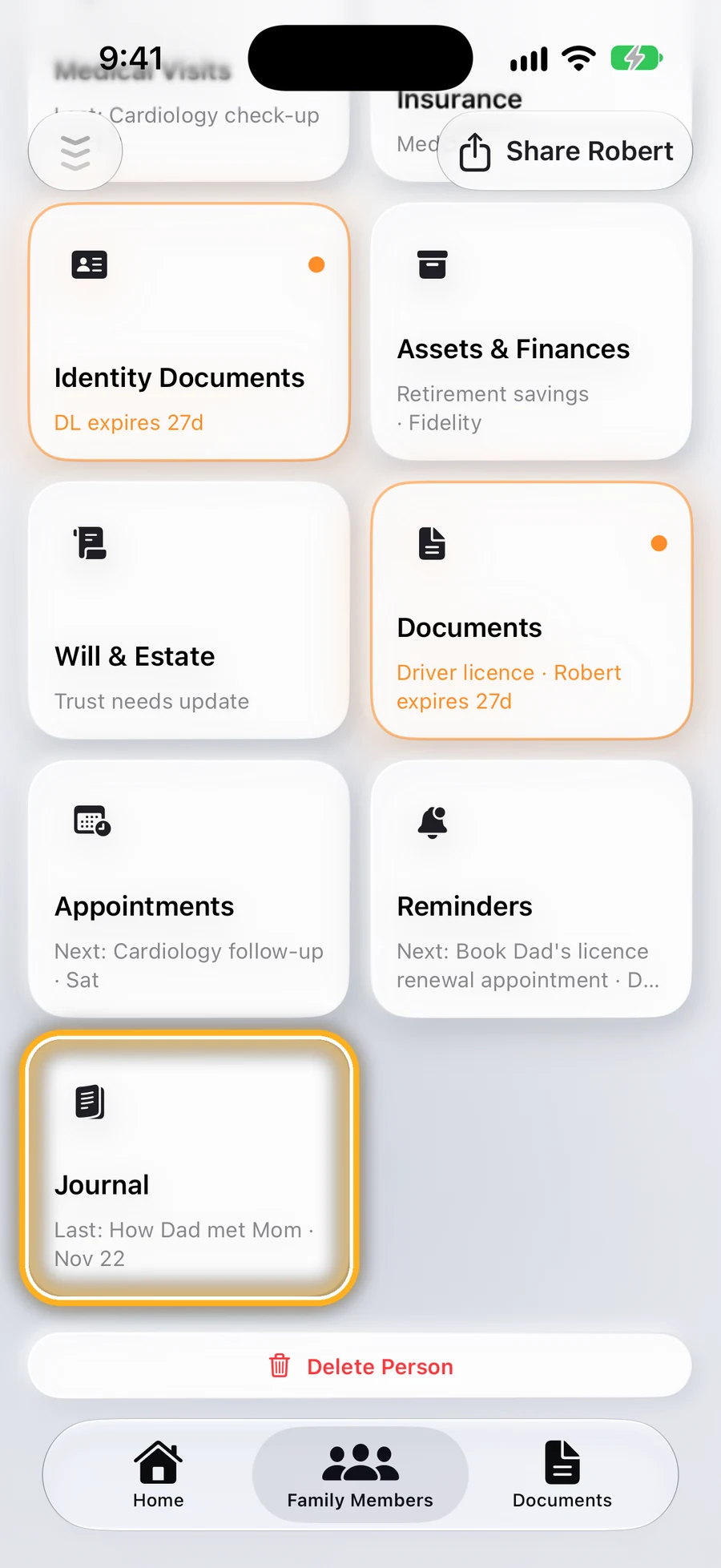
Step 1: Open your parent and tap Journal
Each person has their own Journal, next to their medicines and papers.
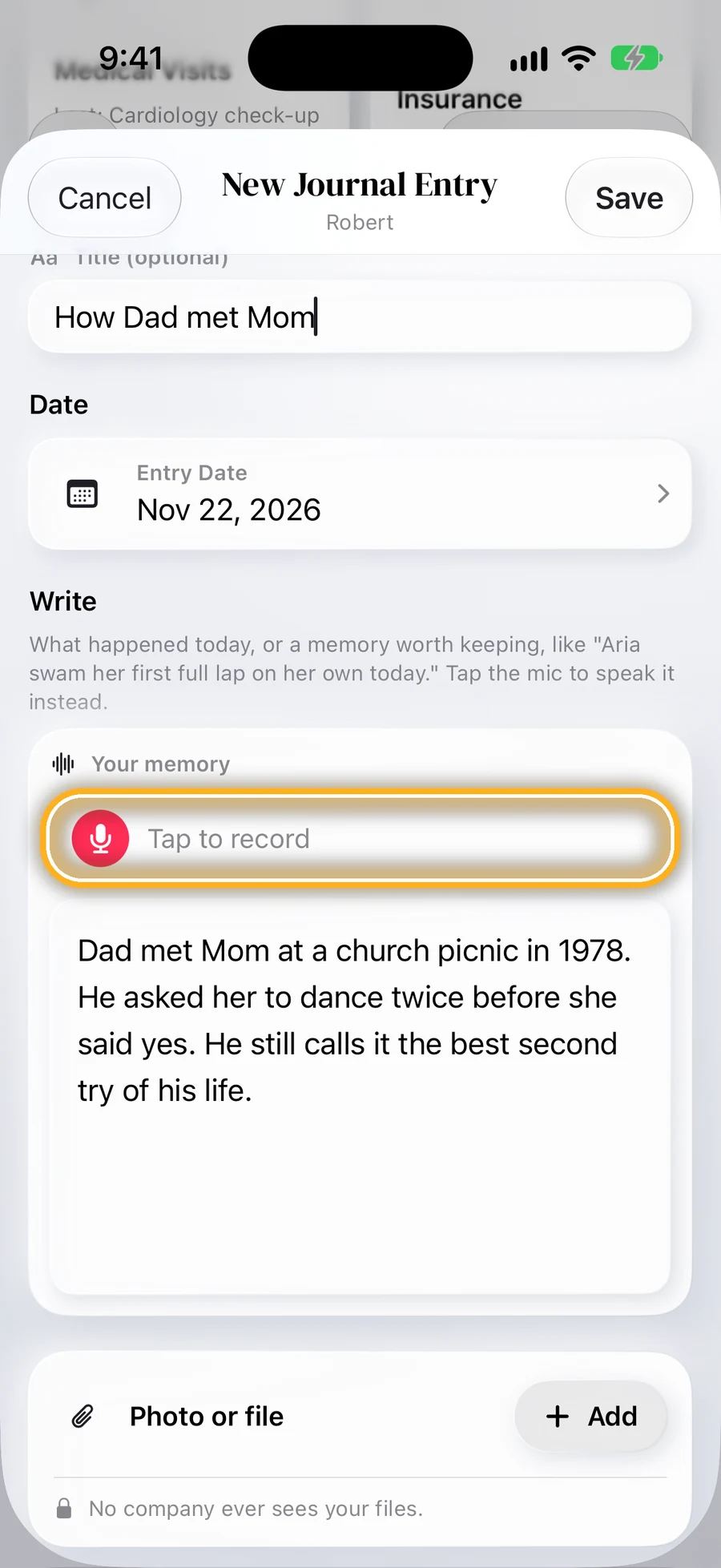
Step 2: Tap to record, or type it
Tap Add Entry. Record their voice with Tap to record, write a few lines, and add an old photo. Then tap Save.
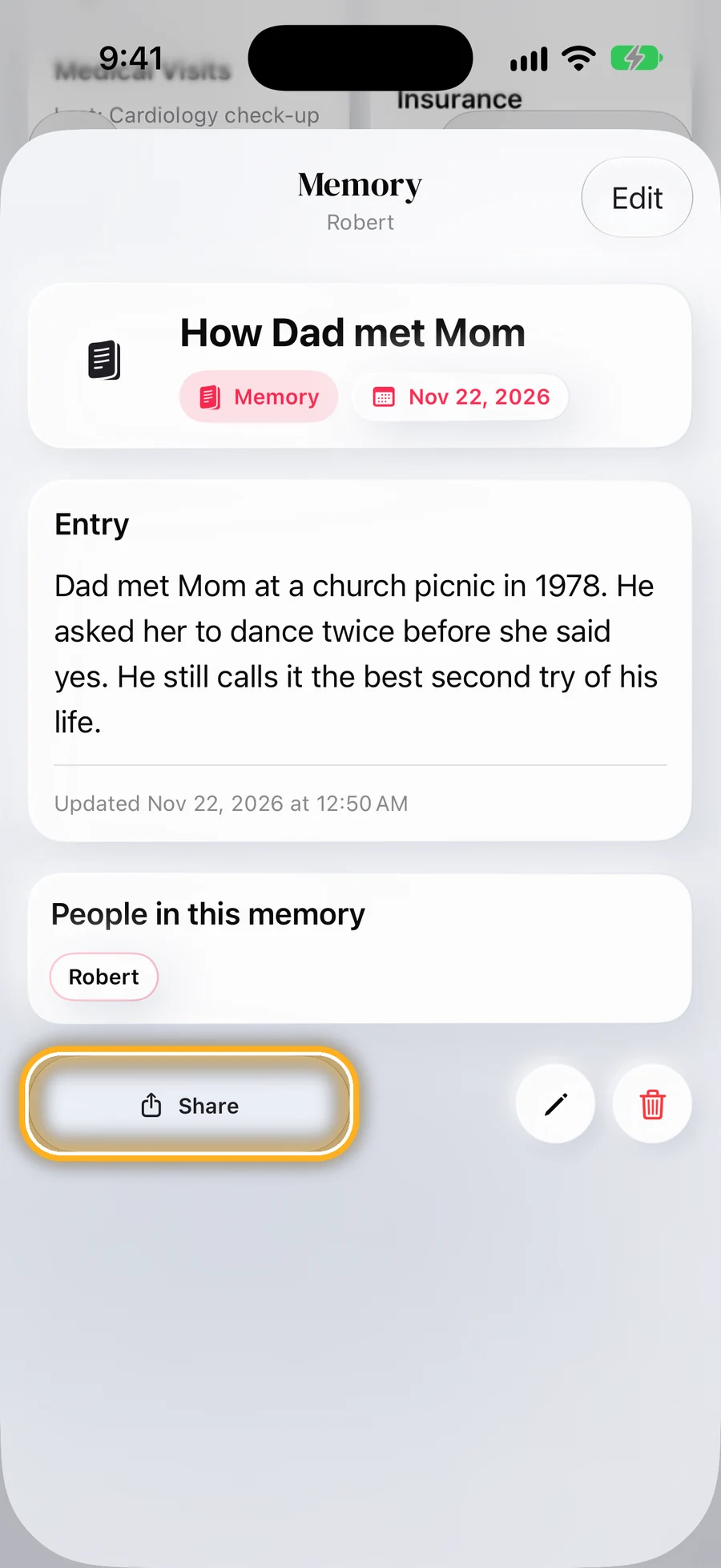
Step 3: Send it to the rest of the family
Tap Share to send the story in a text or email.
Quick questions
- How do I start without it feeling like an interview?
- Start with something easy, like where they grew up, or an old photo. Let them wander. The best stories often come from a side road.
- Should I record it?
- If they're happy with it, yes. A voice keeps the way they tell it: the pauses, the laugh. Ask first, and keep the phone where they can see it.
- What if a question brings up a sad memory?
- Let them choose. Say it's fine to skip any question, and stop when they're tired. You can come back another day.
- What do I do with the recordings?
- Label each one with the name, date and place. Keep a copy somewhere safe, and share it with the rest of the family.
Sources
- Smithsonian Center for Folklife and Cultural Heritage: Oral History Interviewing Guide
- Library of Congress: Preserving family stories
This page is general information. The questions are our own; the tips come from the sources below.
Ask one question this week. Keep the answer.
KinLine is free to start. No account, no sign-up.


Free to download · No account needed