























Real life · About 4 minutes
When the doctor mentions hospice
It's one of the hardest conversations a family has. Here's what palliative care and hospice really are, how they differ, and what they can give you.
By the KinLine team · Updated
Palliative care
Care that focuses on comfort and quality of life, for anyone with a serious illness, at any age. It can start when the illness is found, and it can go alongside treatment to cure it. A team of doctors, nurses, social workers and others works with the family. Ask the doctor for a referral.
Hospice care
A kind of palliative care for the final months of life, when the doctor believes someone has six months or less if the illness runs its course. Treatment to cure the illness stops. Other care goes on: if Dad takes blood pressure medicine, he keeps taking it.
- At home, or in a nursing home, hospital or hospice center
- The team visits regularly, and someone answers the phone day and night
- At home, family gives daily care, and hospice teaches you how
- Respite care gives caregivers a break, for hours or weeks
- Medicare pays for some hospice charges
Don't wait too long
Many people start hospice late. The National Institute on Aging says starting earlier can give months of meaningful care and time together. Families who used hospice were more satisfied with end-of-life care.
It's easier when your parent's wishes are already on paper. Our guide to the advance directive explains the living will, the health care proxy and the free state forms.
Their wishes, and their stories
Here's our sample family.
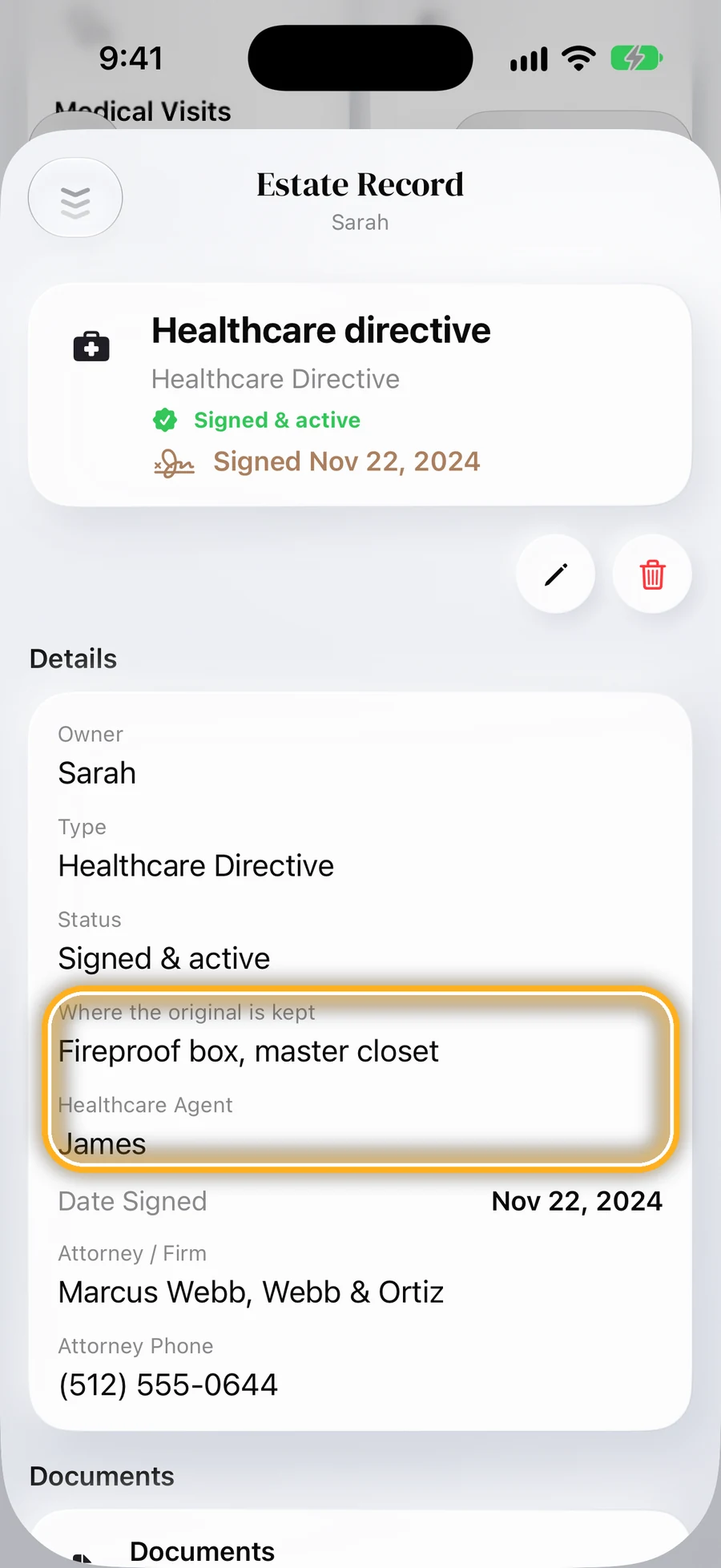
Step 1: The advance directive, and where it is
In Will & Estate, keep who the health care agent is and where the signed original lives.
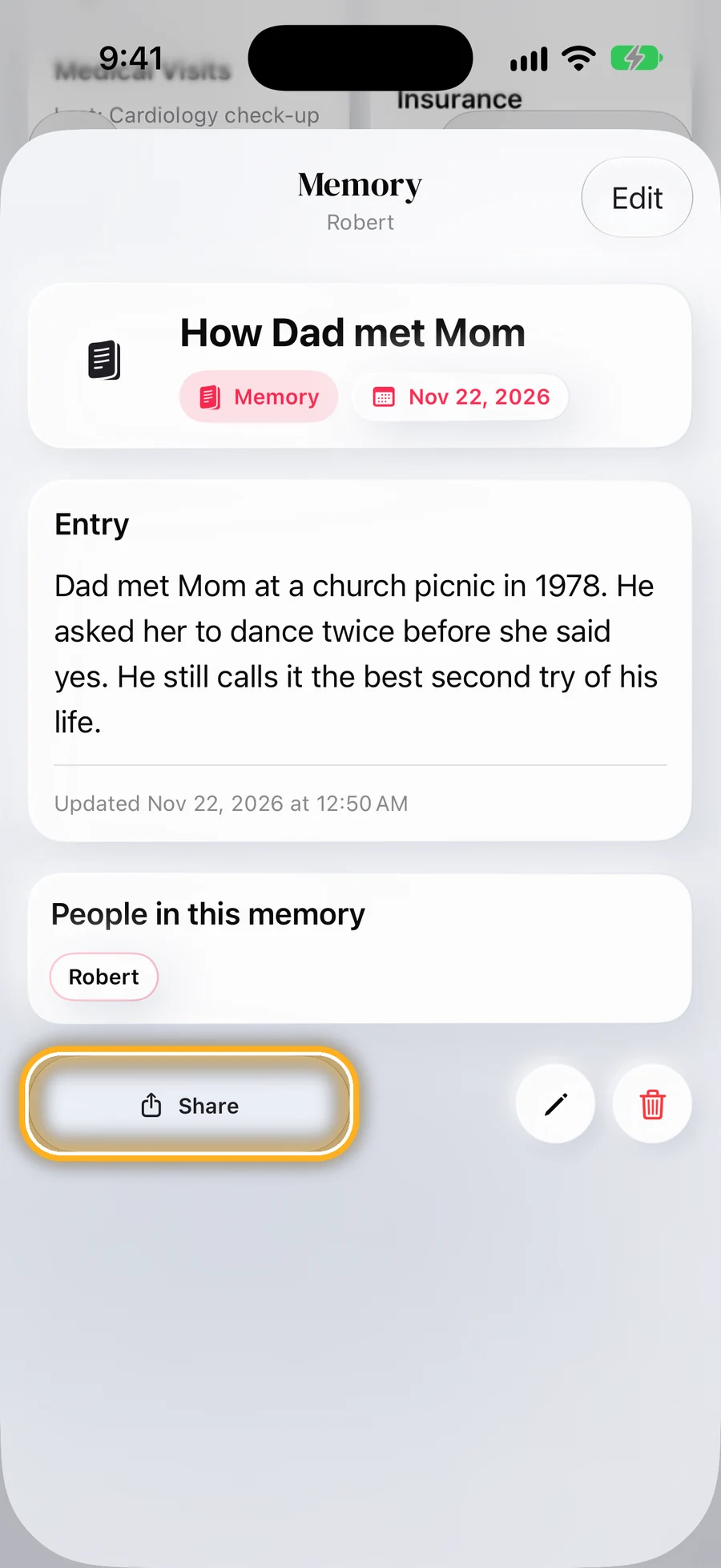
Step 2: Their stories, in their own voice
In the Journal, record the stories you want to keep, and share them with the family.
Quick questions
- What's the difference between palliative care and hospice?
- Both focus on comfort and quality of life. Palliative care is for anyone with a serious illness and can go alongside treatment to cure it. Hospice is for the final months, when treatment to cure the illness stops and care focuses on comfort.
- Who can get hospice care?
- Someone with a serious illness whose doctor believes they have six months or less to live if the illness runs its natural course.
- Does hospice mean stopping all treatment?
- No. Treatment to cure the illness stops, but other care continues. For example, someone can keep taking their blood pressure medicine.
- Where is hospice care given?
- At home, or in a nursing home, hospital or hospice center. At home, family gives the day-to-day care, with coaching and breaks from the hospice team.
- Who pays for it?
- Medicare pays for some hospice charges. Medicare, Medicaid and insurance may cover palliative care. Ask the insurer about your situation.
Read next
Sources
This page is general information, not medical advice. Talk with the doctor about what's right for your family.
Comfort, and time together.
KinLine is free to start. No account, no sign-up.


Free to download · No account needed