























Real life · About 5 minutes
Documents needed to file taxes: the checklist
To file your taxes you need four kinds of papers: who you are (ID and Social Security numbers), what came in (W-2s, 1099s, the SSA-1099), your health coverage form if you had a Marketplace plan, and records of costs that may lower your tax. Here's the full list, from the IRS, for you or a parent you help.
By the KinLine team · Updated
1. Who you are
- Photo ID for you, and your spouse if you file together
- Social Security cards for you, your spouse and each child or other dependent (or their ITIN letters)
- Birth dates for everyone on the return
- Last year's tax return, federal and state, if you have it
- Your bank's routing and account numbers for a refund by direct deposit. A blank check shows both.
- IRS letters, including the one with a new Identity Protection PIN (notice CP01A)
2. What came in: income forms
- W-2 from each job
- SSA-1099 if you get Social Security. It comes every January.
- 1099-R for money from a pension, IRA or retirement plan
- 1099-INT and 1099-DIV for bank interest and dividends
- 1099-G for unemployment, or a state tax refund
- 1099-NEC or 1099-MISC for side jobs and other work you were paid for
- 1099-K from payment apps and online marketplaces. For 2026, they send one when you got over $20,000 from more than 200 sales.
- 1099-DA if you sold bitcoin or other digital assets through a broker
- W-2G for gambling winnings
Got paid with no form? The IRS says that income still has to be reported. Your IRS online account shows many W-2s and some 1099s.
3. Health coverage
- Form 1095-A, if anyone had a Marketplace health plan (from HealthCare.gov or your state's site)
4. Costs that may lower your tax
- Daycare: the total you paid and the provider's tax ID number
- Form 1098 from your mortgage lender, for the interest you paid
- Form 1098-T from the school, if you or someone on your return took college classes
Big changes count too. Buying a home, starting college, losing a job, getting married or divorced, a new baby or the death of a spouse can change what you can claim. Have those papers ready, like a new baby's Social Security card.
When the forms arrive
Most W-2s and 1099s should reach you by January 31. If one is missing, ask the employer or payer first. If it still hasn't come by the end of February, the IRS says to call 800-829-1040. If it never comes in time, you can estimate with your pay stubs on Form 4852.
Lost the SSA-1099? You can get a new copy in your my Social Security account. People who only get SSI don't get one.
Doing taxes for a parent
The list is the same, but the forms usually arrive at your parent's address. Watch for the SSA-1099, 1099-R from each pension or IRA, and 1099-INT from each bank. Our guide to managing a parent's money covers how to get the right to help.
After you file
- Keep the papers. The IRS says, in general, three years from the date you filed.
- Moved or changed your name? Tell the IRS and Social Security.
- Get an IP PIN. It stops anyone else from filing with your Social Security number.
- File online with direct deposit. It's the fastest way to get a refund, and paper checks are being phased out.
Free help
- IRS Free File, for most people, through IRS.gov
- Tax Counseling for the Elderly (TCE) and Volunteer Income Tax Assistance (VITA): free basic tax preparation for people who qualify. Bring everything on this list. Married and filing together online? You both need to be there to sign.
Watch for scams. People pretend to be the IRS. If a message pressures you for money or personal details, check that it's real first.
A tax folder for each person
Here's our sample family.
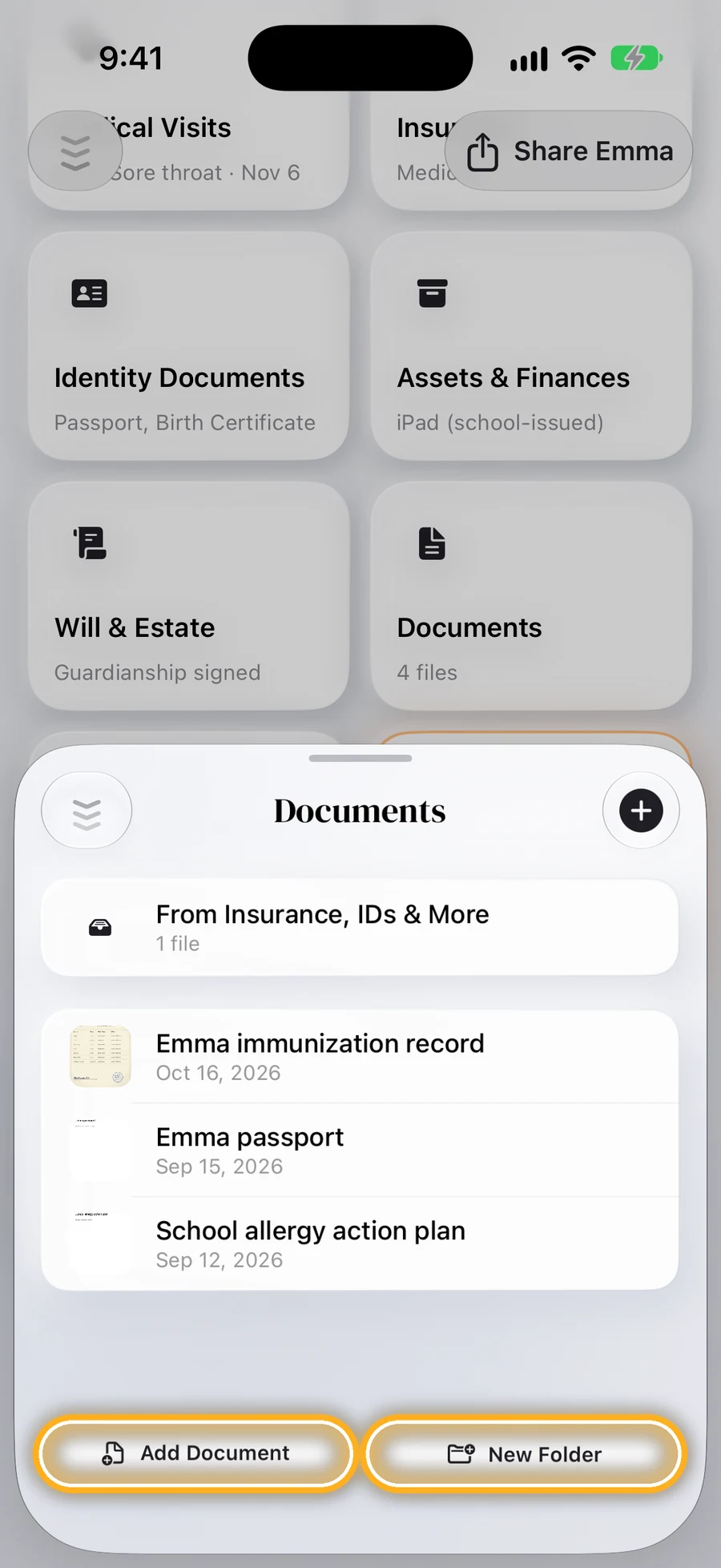
Step 1: A folder for this year's forms
In Documents, tap New Folder, then photograph each form as it arrives.
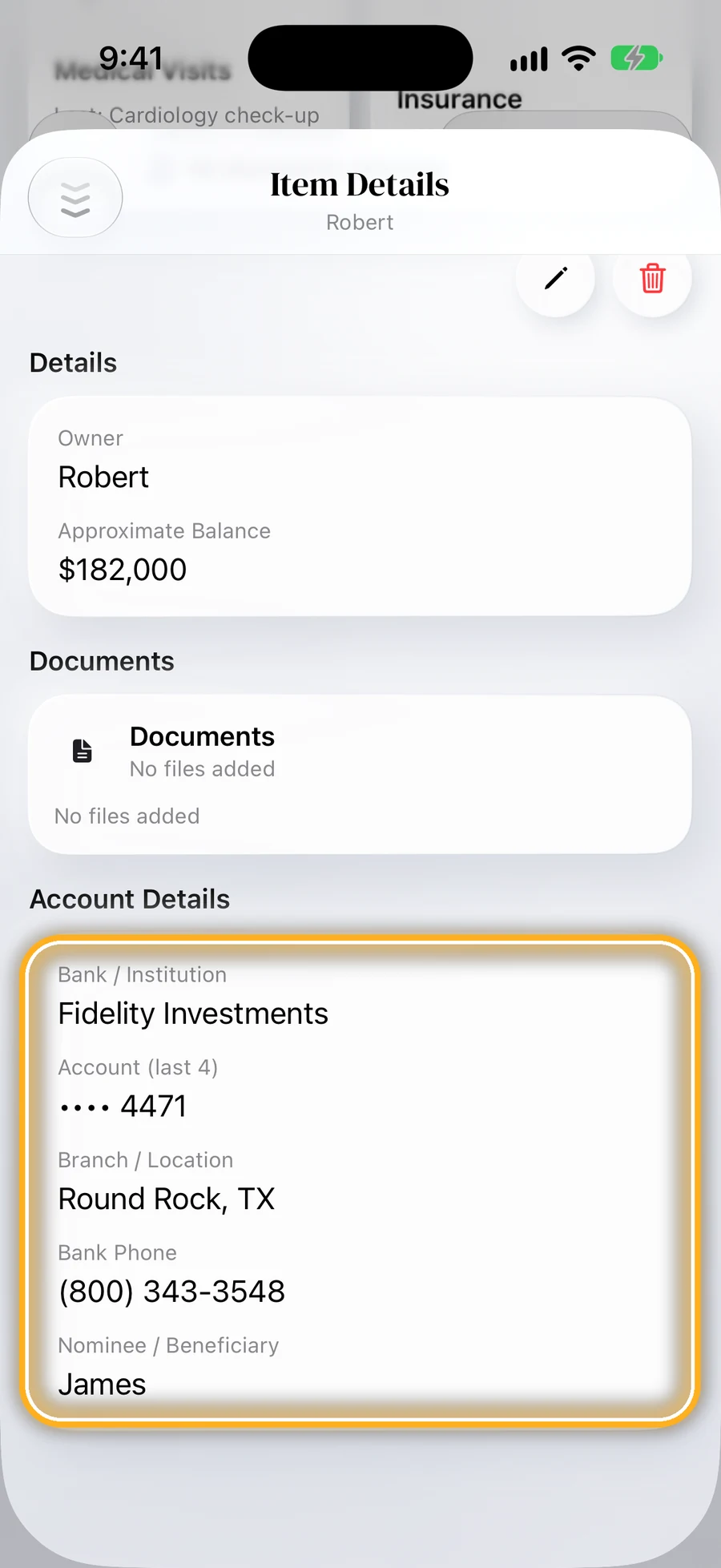
Step 2: Where the retirement money is
Each account keeps the company and phone, so you know who sends the 1099.
Quick questions
- What documents do I need to file my taxes?
- Photo ID, Social Security cards (or ITIN letters) for everyone on the return, last year's return, your bank's routing and account numbers, and every income form: W-2s from each job, 1099s (interest, dividends, retirement, unemployment, side work, payment apps, digital assets) and the SSA-1099 if you get Social Security. Add Form 1095-A if you had a Marketplace health plan, and records of costs like daycare, mortgage interest or tuition.
- When should my tax forms arrive?
- Most W-2s and 1099s should reach you by January 31. Social Security mails the SSA-1099 every January.
- What if a W-2 never comes?
- Ask your employer first. If you still don't have it by the end of February, the IRS says to call 800-829-1040. You can use Form 4852 and your pay stubs to estimate if it doesn't come in time.
- Do I need last year's tax return?
- It helps. The IRS lists last year's federal and state returns on its checklist for free tax help. Your IRS online account shows details from the last five years of returns.
- What is an IP PIN?
- A six-digit Identity Protection PIN from the IRS. It stops anyone else from filing a tax return with your Social Security number. The easiest way to get one is your IRS online account.
- How long should I keep tax papers?
- The IRS says, in general, three years from the date you filed. Check IRS.gov if you're not sure about a paper.
- Is there free help for older adults?
- Yes. The IRS's Tax Counseling for the Elderly (TCE) and Volunteer Income Tax Assistance (VITA) programs offer free basic tax preparation to people who qualify.
- We moved. Do we need to tell the IRS?
- Yes. The IRS says to report address or name changes to both the IRS and Social Security.
Read next
Sources
- IRS: Checklist for free tax return preparation
- IRS: Steps to take now to get a jump on next year's taxes
- IRS: How to file when taxpayers have incorrect or missing documents
- IRS: If you don't get a W-2 or your W-2 is wrong
- IRS: About Form 1098, Mortgage Interest Statement
- IRS: About Form 1098-T, Tuition Statement
- Social Security: Get your Social Security Benefit Statement (SSA-1099)
- IRS: Good recordkeeping year-round
This page is general information, not tax advice. Check IRS.gov or a tax professional for your situation.
Every form, in one folder, before you start.
KinLine is free to start. No account, no sign-up.


Free to download · No account needed