























Real life · About 4 minutes
Dad's driving is starting to worry you
A new dent. A near miss. Getting lost on a familiar road. Here are the signs to watch for, and how to talk about it without taking away more than the keys.
By the KinLine team · Updated
Signs to watch for
- Crashes, near misses, or new dents and scrapes on the car
- Two or more tickets or warnings in the last two years
- Car insurance going up because of driving
- Neighbors or friends mentioning unsafe driving
- Worry about driving at night
- Trouble seeing, hearing or moving
- The doctor suggesting they drive less, or stop
Medicines can matter too. Ask the doctor or pharmacist if any of them could make driving unsafe.
Having the talk
- Be ready. Find other ways to get around before you bring it up.
- Say "I". "I'm worried about your safety", not "You're not safe".
- Talk about skills, not age.
- Keep the goal clear: staying safe and still doing the things they enjoy.
- Go gently. It's a big loss. You may need to come back to it over time.
Not sure? A driving rehabilitation specialist can check their driving. Your state's DMV or the doctor can recommend one.
Getting around without the car
Many areas have free or low-cost buses and rides for older adults, and volunteers who drive. Call the Eldercare Locator at 800-677-1116 to find them. Giving up a car also saves on insurance, gas and repairs.
No license any more? A state ID card works for ID. Our REAL ID guide explains which ones work at the airport.
The license, the car, and what comes next
Here's our sample family.
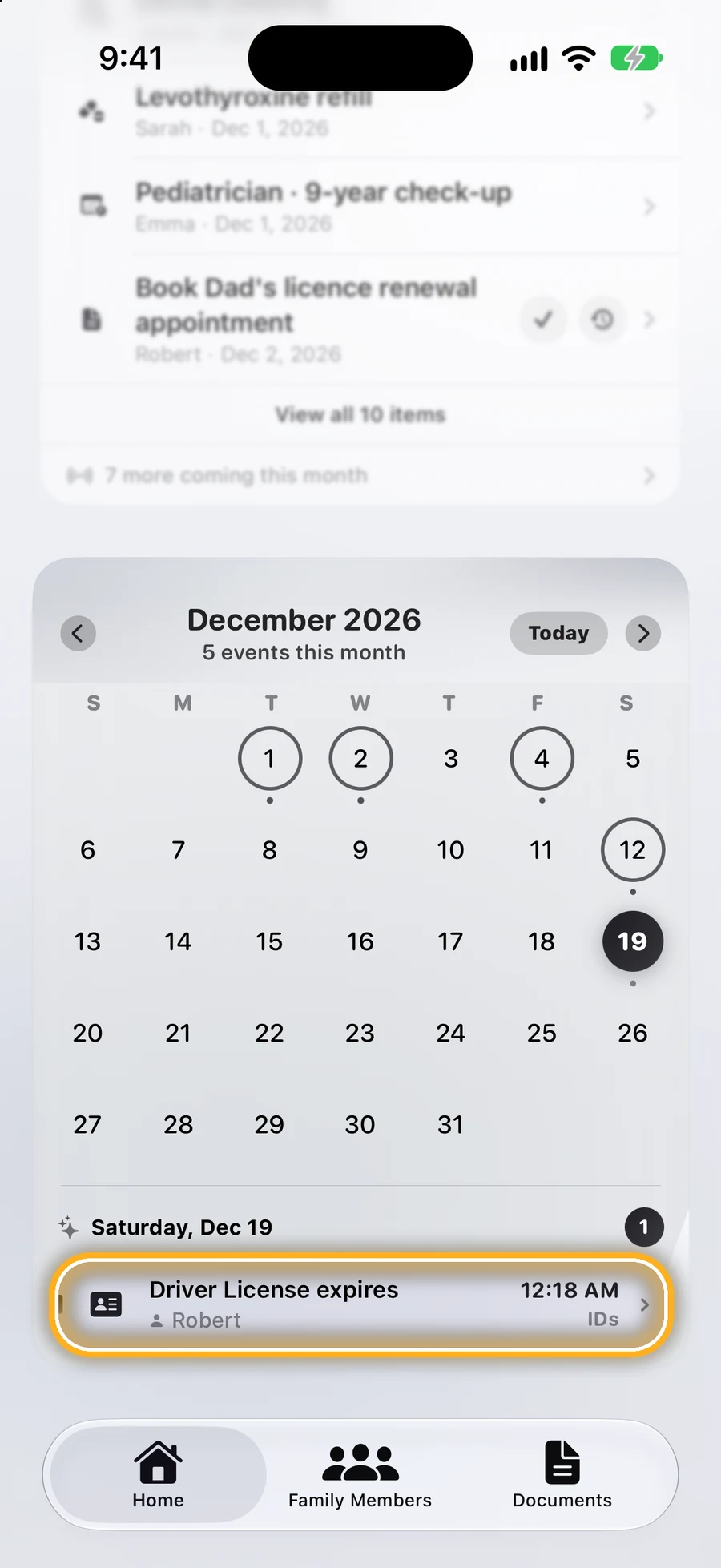
Step 1: When the license runs out
Add the expiry date, and it shows on the calendar. A good moment to talk, before the renewal.
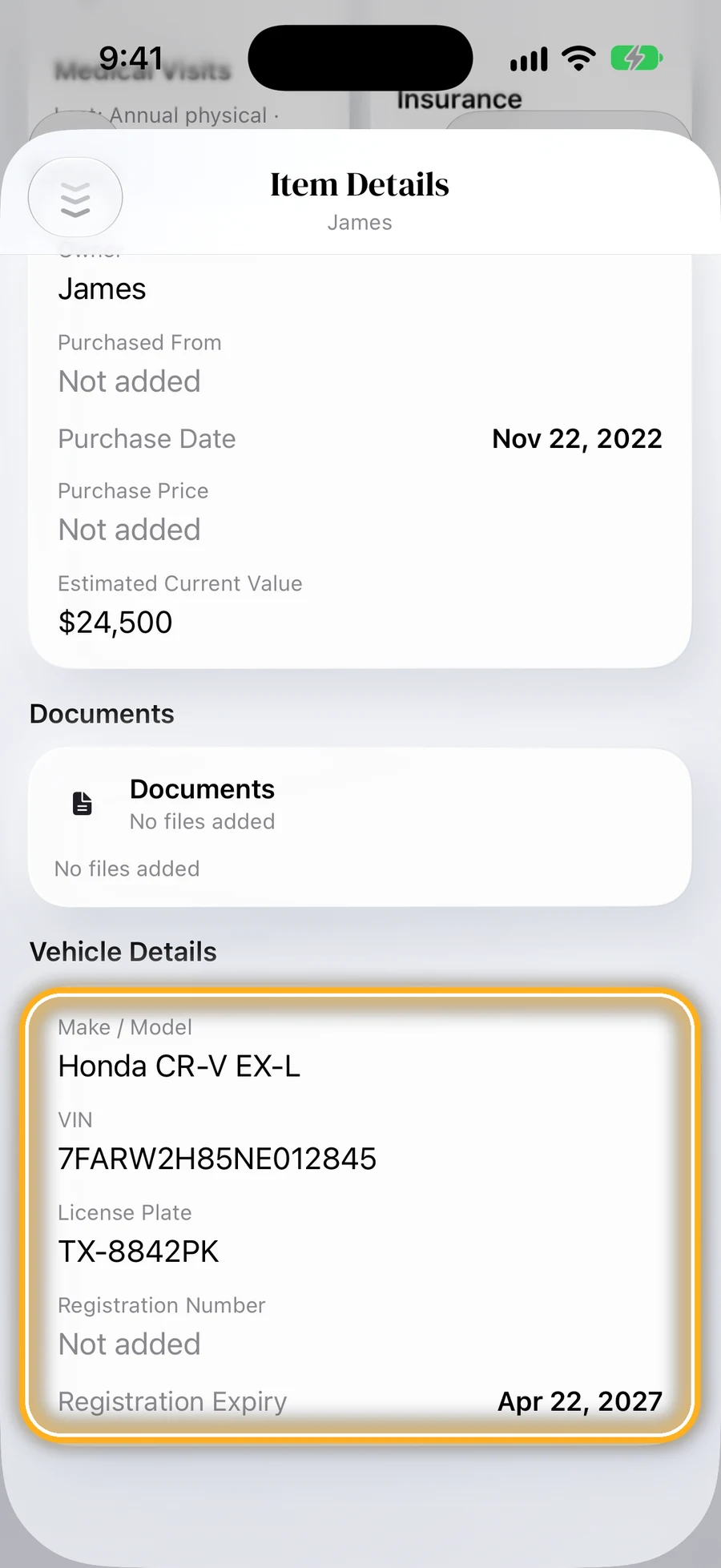
Step 2: The car's papers, if it's sold
In Assets & Finances, a car keeps its VIN, plate and registration, all handy if it's sold.
Quick questions
- At what age should someone stop driving?
- There isn't one. The National Institute on Aging says everyone ages differently, so it's about driving skills, not age.
- What are the signs my parent should stop driving?
- Crashes, near misses or new dents on the car, two or more tickets or warnings in two years, worried comments from neighbors, trouble seeing or hearing, and a doctor suggesting they drive less or stop.
- How do I bring it up?
- Have other ways to get around ready first. Say "I'm worried about your safety" rather than "You're not safe". Talk about skills, not age, and maybe raise it gently over time.
- Can someone check my parent's driving?
- Yes. A driving rehabilitation specialist or occupational therapist can assess it. Your state's DMV or the doctor can recommend someone. There may be a fee.
- How will they get around?
- Many areas have free or low-cost rides for older adults, and volunteers who drive. Call the Eldercare Locator at 800-677-1116 to find local services.
Read next
Sources
- National Institute on Aging: Safe driving for older adults
- National Institute on Aging: Driving safety and Alzheimer's disease
This page is general information, not medical or legal advice. Driving rules differ by state.
Keep the independence. Change the ride.
KinLine is free to start. No account, no sign-up.


Free to download · No account needed