


Guide for caregivers · About 5 minutes
Caring for a parent with dementia: keeping track of it all
Your parent may not remember the doctor's name, the new pill or what happened on Tuesday. So someone has to. Here's how to keep it simple, and where to get help.
By the KinLine team · Updated
1. Medicines
- Keep one list: each medicine, how much, what time, and what it's for
- Use a weekly pill organizer, and a chart or phone alert for times
- If your parent lives alone, call when it's time to take them
- Never stop a medicine without asking the doctor or pharmacist
Start with the free printable medication list.
2. Doctor visits
- Go with them, and bring the medicine list
- Tell the doctor about any changes you've noticed
- Write down what the doctor says before you leave
3. Changes you notice
Sleep, appetite, mood, a fall, a bad afternoon. Write down the date and what happened. Over a few weeks, a pattern often shows, and the doctor can use it.
4. Papers, while you can still ask
A health care proxy, power of attorney and a will are easier to sort out early. See the important documents checklist.
5. Help for you
- Alzheimer's Association 24/7 Helpline: 800-272-3900
- NIA ADEAR Center: 800-438-4380
- Eldercare Locator (local services): 800-677-1116
One page for Mom or Dad, shared with the family
Here's Robert, 71, from our sample family. The same cards work for a parent with dementia.
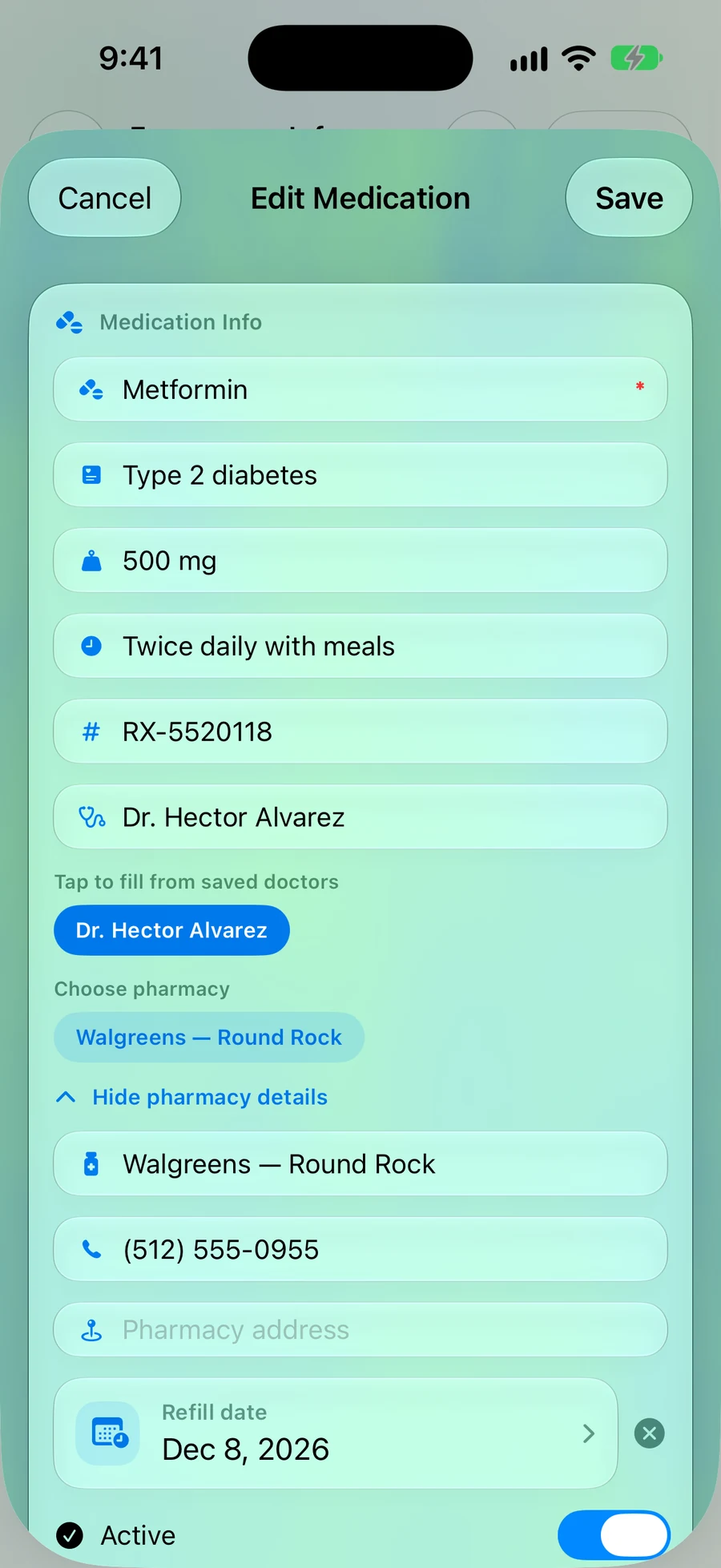
Step 1: Every medicine, with dose and time
In Emergency Info, tap Medications. Add the dose, when to take it, the doctor and the pharmacy. KinLine reminds you before the refill is due.
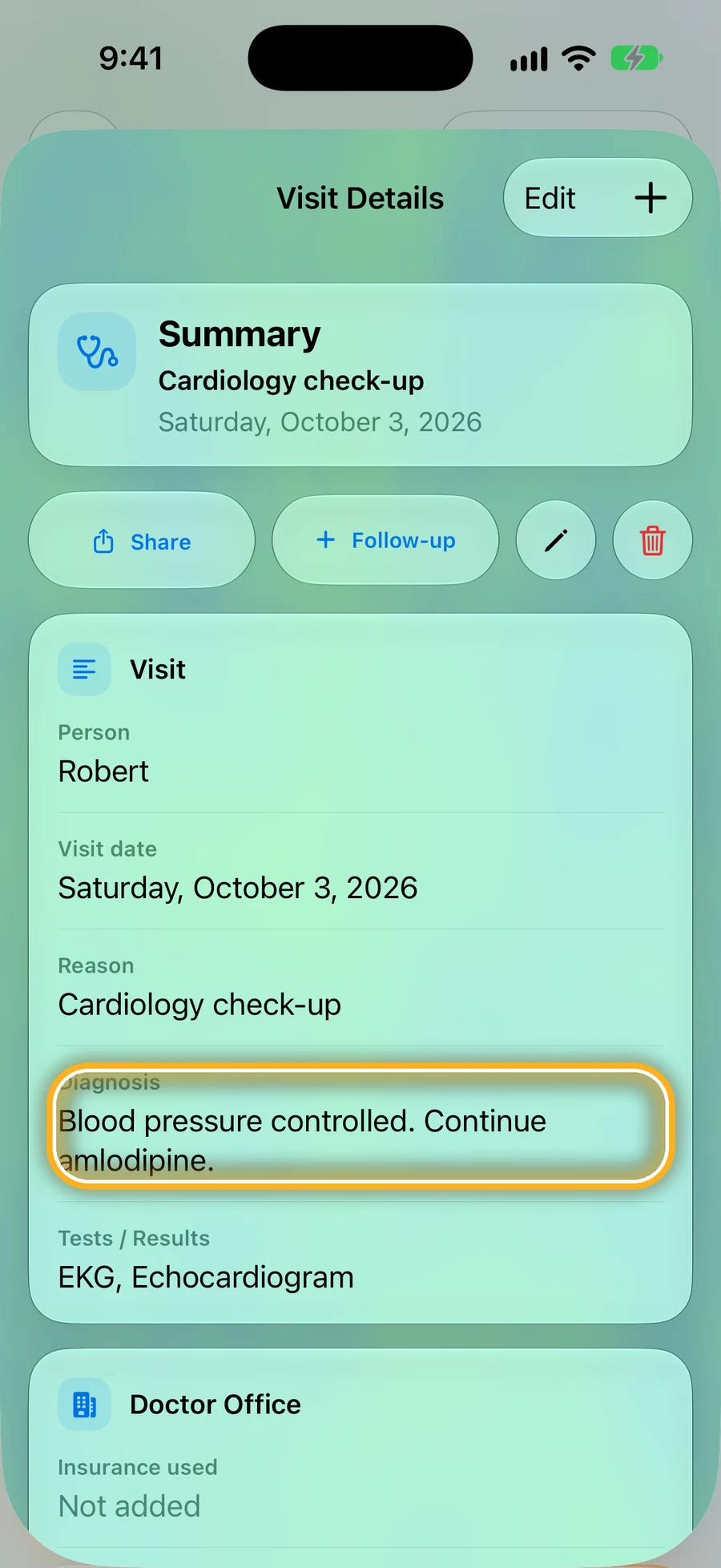
Step 2: Every visit, written down
Tap Medical Visits, then New Visit, and write what the doctor said. Use the Journal card for the changes you notice at home.
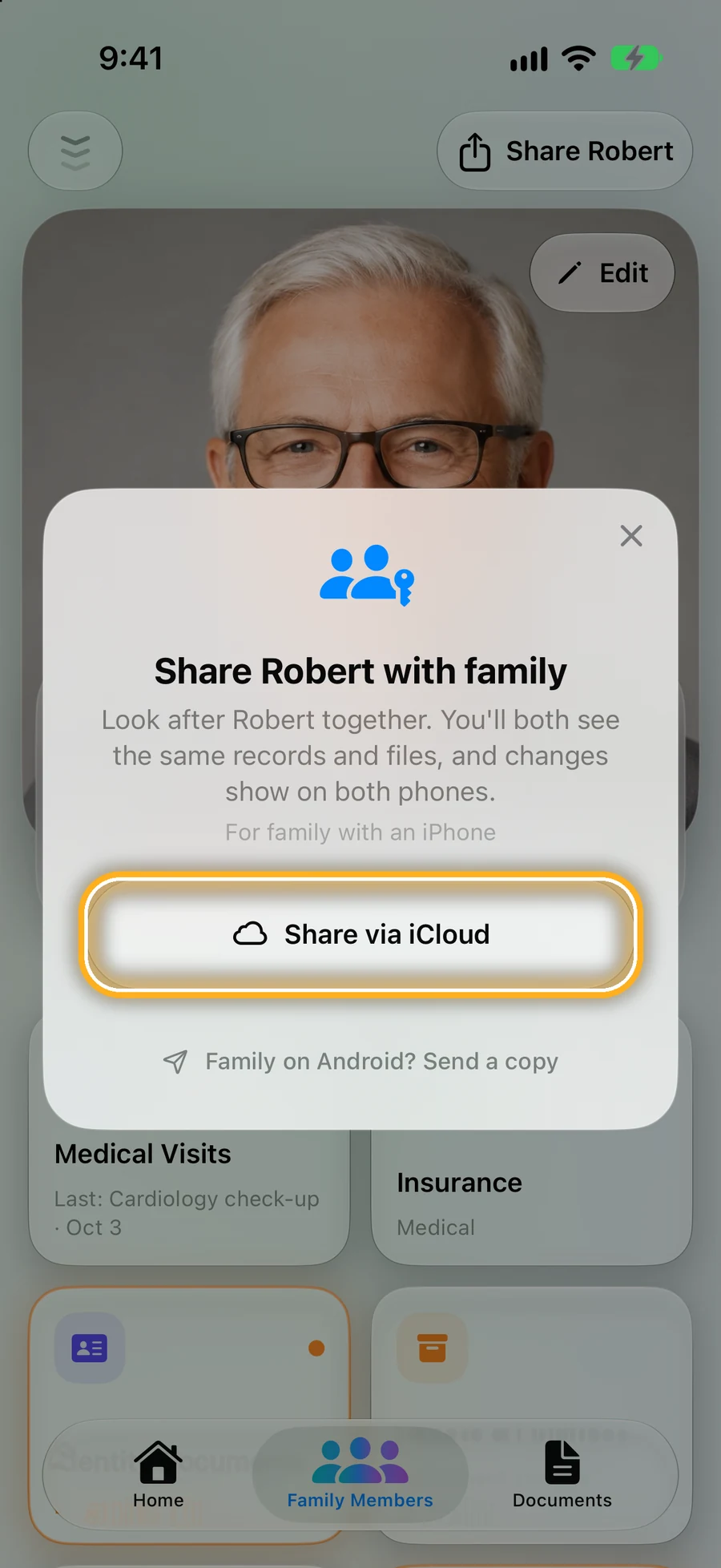
Step 3: Share Mom's page with your brothers and sisters
On iPhone, tap Share, then Share via iCloud. Everyone sees the same medicines and visits.
Quick questions
- Who can I call for help?
- The Alzheimer's Association runs a free 24/7 Helpline at 800-272-3900. The National Institute on Aging's ADEAR Center (800-438-4380) answers questions and points you to local help.
- Should I write down changes in behavior?
- Yes. The National Institute on Aging says keeping track of changes can help you and the doctor spot a pattern and find what's causing it. Note the date, what happened and what was going on just before.
- Can I stop a medicine that seems to cause problems?
- Not on your own. Talk with the doctor or pharmacist first. The person should not stop any medicine without checking with their health care provider.
- Is this medical advice?
- No. This page is about keeping good records. The doctor decides the care.
Read next
Sources
- NIA: Managing medicines for a person with Alzheimer's
- NIA: Managing personality and behavior changes
- Alzheimer's Association: 24/7 Helpline
This page is general information, not medical advice. Ask a doctor, nurse or pharmacist about your own situation.
You remember, so they don't have to.
KinLine is free to start. No account, no sign-up.


Free to download · No account needed