























Guide · About 4 minutes
Lost your wallet? What to do, in order
Your stomach drops. Breathe. Most of what was in there can be stopped or replaced in an afternoon, if you go in the right order.
By the KinLine team · Updated
1. Right away: your cards
Call the bank or credit union for each card, or lock it in their app. The faster you report, the less you can lose:
- Credit card: nothing, if you report it before anyone uses it. At most $50 after.
- Debit or ATM card: nothing before it's used, up to $50 within 2 business days, and up to $500 after that. Wait more than 60 days past your statement and you could lose everything taken.
Then send a short letter or message to each one, with the date you noticed and the date you called.
2. Today: your license and insurance cards
- Driver's license: tell your state's motor vehicle office. Find it at usa.gov/state-motor-vehicle-services.
- Medicare card: call 1-800-633-4227 (TTY 1-877-486-2048).
- Medicaid card: your state office, through medicaid.gov.
- Health insurance card: the number on your insurance statements. Not sure of your member ID? Find your policy number without the card.
- Passport, if it was in there: travel.state.gov, or 1-877-487-2778 (TTY 1-888-874-7793).
3. This week: your credit
If your Social Security card or number was in the wallet, protect your credit:
- Get your free credit reports at AnnualCreditReport.com and look for accounts you don't know.
- Freeze your credit for free at each bureau: Experian 888-397-3742, TransUnion 888-909-8872, Equifax 800-685-1111.
- Or place a free one-year fraud alert with one of them.
- Check your work history at ssa.gov/myaccount for jobs that aren't yours.
If someone has already used your name or cards, report it at IdentityTheft.gov.
Next time: be ready
- Carry only the cards you need. Never carry your PIN.
- Keep your bank's phone number in your phone's contacts.
- Know what's in your wallet: which IDs, which insurance cards, and who to call for each.
What was in it, and who to call
Here's our sample family: James's IDs and Robert's insurance.
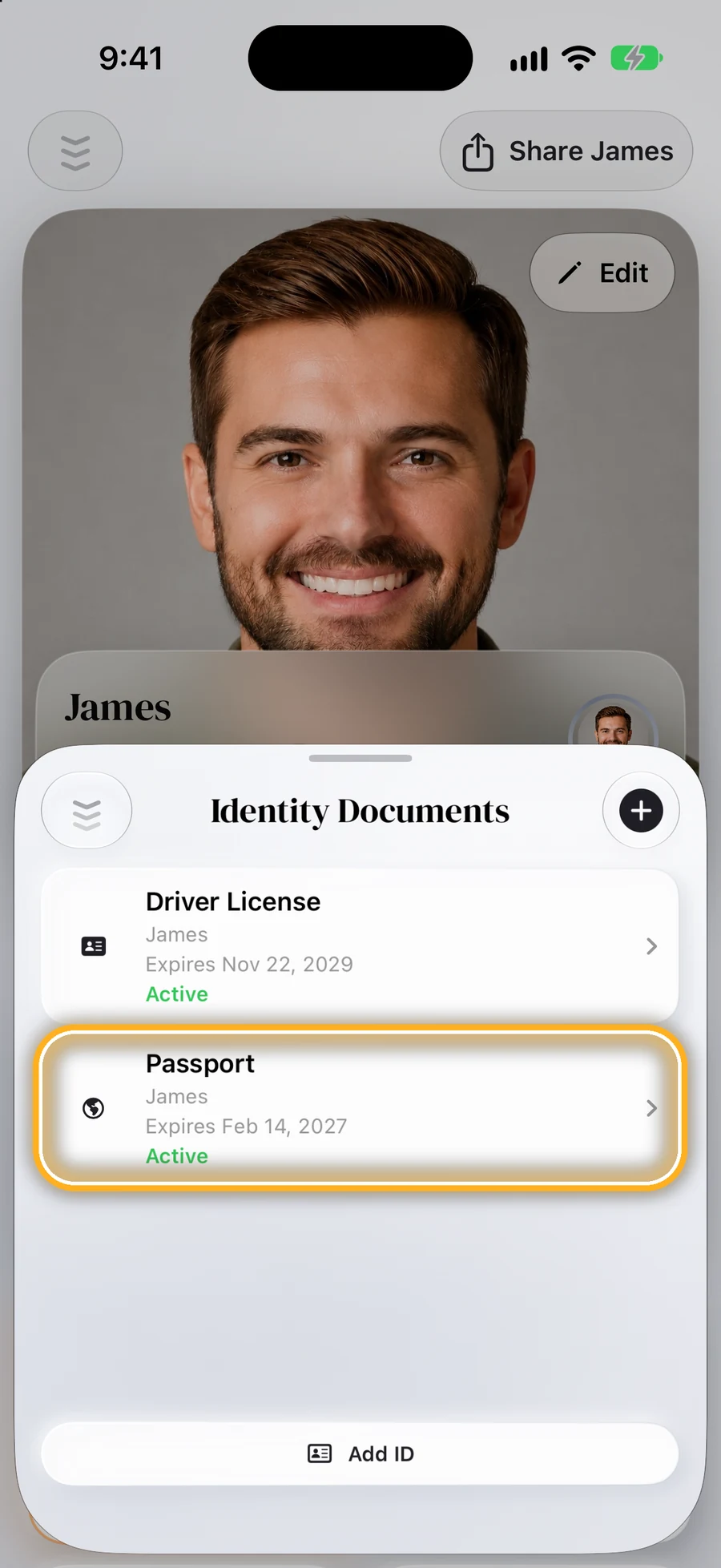
Step 1: Each person's IDs, front and back
Open someone and tap Identity Documents. Add a photo of the front and back of each one.
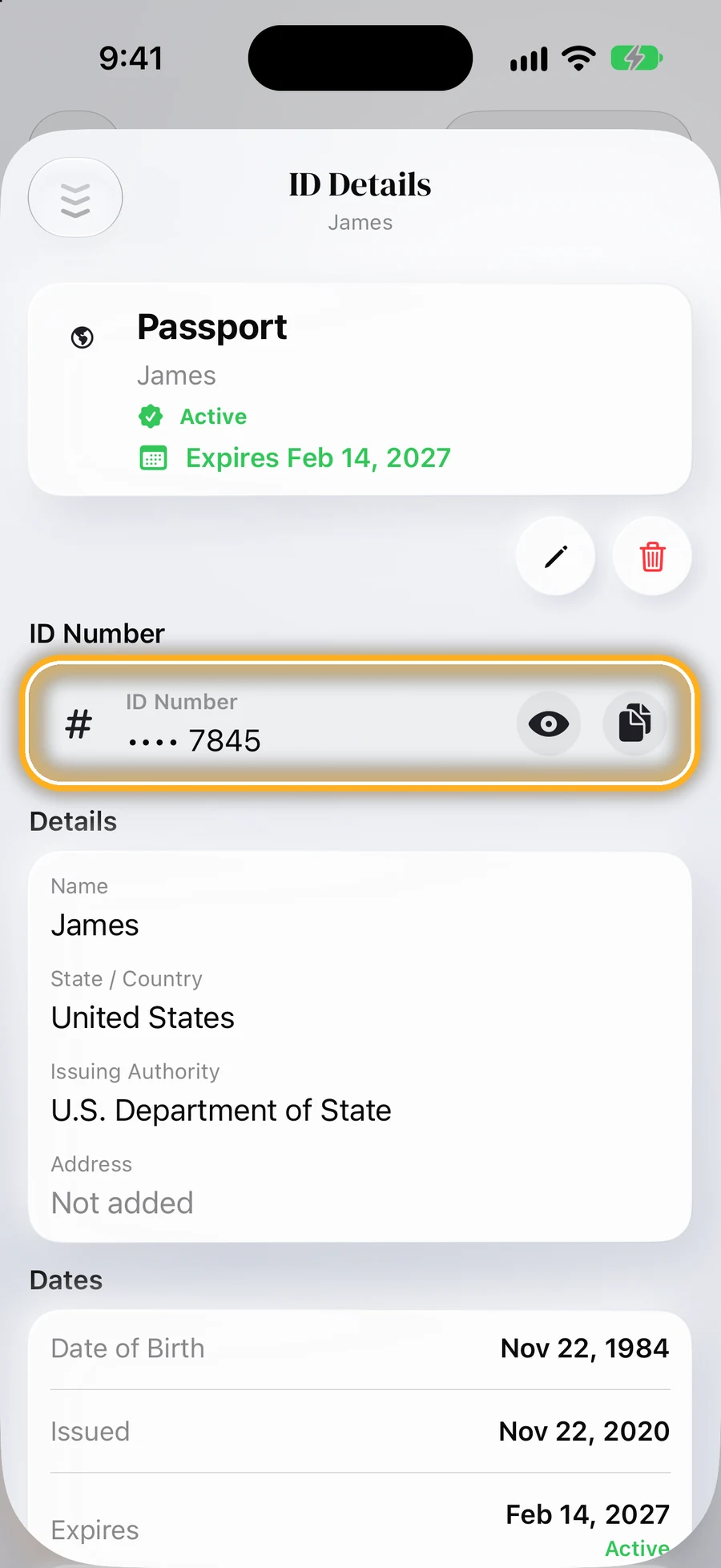
Step 2: The number, when the office asks
The number stays hidden until you tap the eye. Copy it straight into the form.
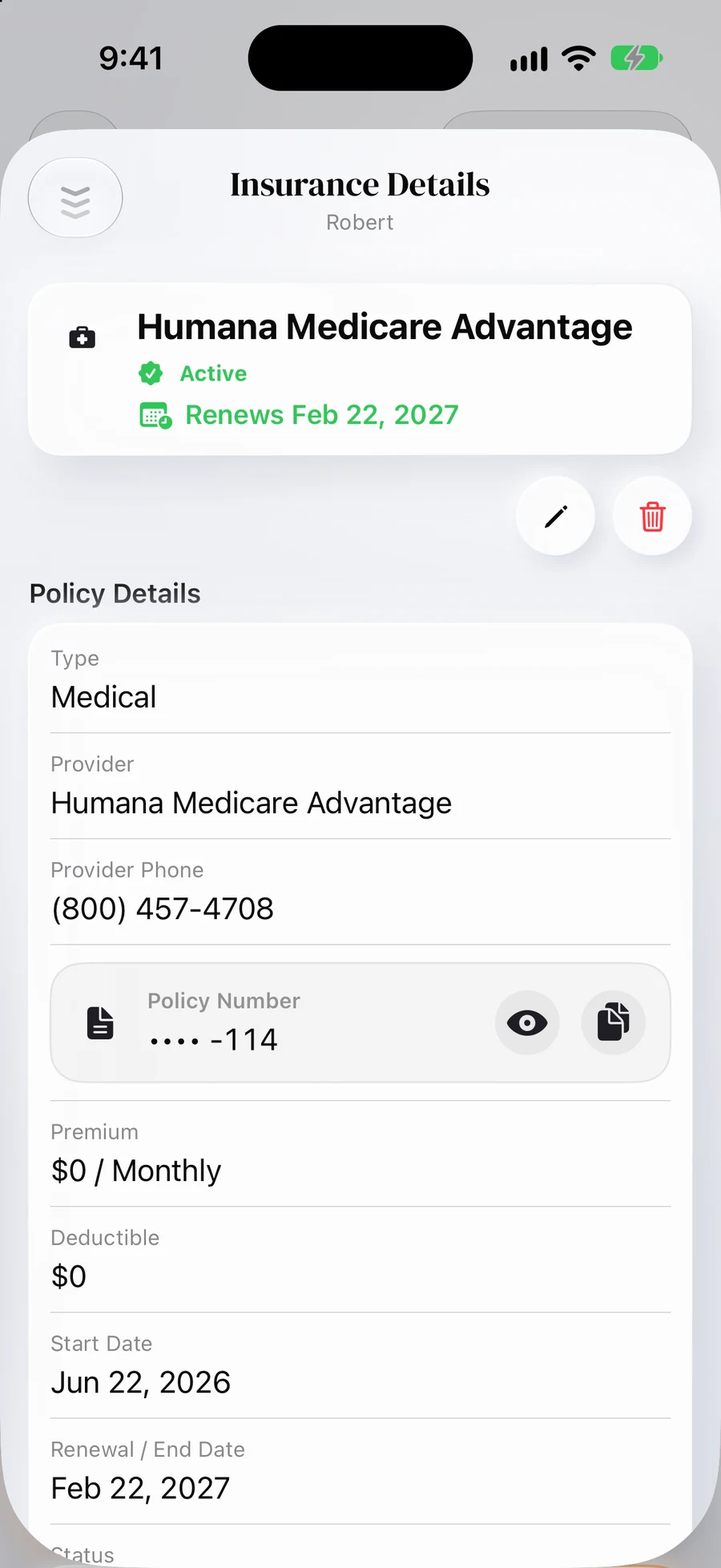
Step 3: The insurance company's phone
Each policy keeps the phone number to call and the policy number, so you can order a new card.
Quick questions
- What should I do first when I lose my wallet?
- Call your bank and credit card companies, or lock the cards in their apps. Under federal law, if you report a credit card before anyone uses it, you don't pay for charges you didn't make.
- Do I need to report a lost driver's license?
- Yes. Tell your state's motor vehicle office. It may flag the number in case someone tries to use it, or tell you to get a duplicate.
- Should I freeze my credit?
- If your Social Security card or number was in the wallet, it's a good idea. It's free at Experian, TransUnion and Equifax, and you can lift it when you need new credit.
- What if someone already used my cards or my name?
- Report it at IdentityTheft.gov. You'll get a recovery plan with the steps to take.
Read next
Sources
- FTC: Lost or stolen credit, ATM and debit cards
- IdentityTheft.gov: If your information was lost or stolen
This page is general information, not legal or financial advice.
Know what's in your wallet before you need to.
KinLine is free to start. No account, no sign-up.


Free to download · No account needed