





















Real life · About 5 minutes
Old medicines in the cabinet? Here's what to do
Expired pills, a medicine the doctor stopped, or a parent's cabinet after a move or a loss. The FDA's safe ways to get rid of them, in order.
By the KinLine team · Updated
The short answer
- Best: take it back. Use a drop-off box or a mail-back envelope.
- No take-back near you? Check the FDA flush list. If the medicine is on it, flush it.
- Not on the list? Mix it with something nasty, seal it, and put it in the trash.
This works for pills, liquids, drops, patches and creams, both prescription and the kind you buy off the shelf. Needles, inhalers and a few others have their own rules, further down.
1. Take-back: the safest way
A take-back option means someone else destroys the medicine for you. The FDA names these:
- A drop-off box or kiosk. Many pharmacies have one by the counter. Ask your local police too.
- National Prescription Drug Take Back Day, run by the DEA in towns across the country. The DEA's website also lists places that take medicines all year.
- A prepaid mail-back envelope. Fill it, seal it, mail it. Pharmacies and online shops sell them, and some pharmacies give them free.
Call your pharmacy before you go. It takes a minute, and they can tell you what their box accepts.
2. No take-back? Check the flush list
A few medicines are so dangerous to the wrong person that one dose can kill. For those, the FDA says flushing is safer than keeping them around, if you can't get to a take-back option soon. If the name of the medicine has one of these words in it, it's on the list:
- Oxycodone, hydrocodone, morphine, hydromorphone, oxymorphone
- Fentanyl, methadone, buprenorphine, meperidine, tapentadol
- Also: sodium oxybate, diazepam rectal gel, and the methylphenidate skin patch
Fentanyl patches still hold a lot of medicine after they come off the skin, so even used ones go on the list. Everything else: don't flush it. The FDA list is the only list.
3. The trash, done safely
Almost every other medicine can go in your home trash when there's no take-back option:
- Take the medicine out of its bottle or box. Mix it with used coffee grounds, dirt or cat litter, so children, pets and anyone digging through the trash leave it alone.
- Put the mix in a bag that zips shut, or an empty can.
- Throw it in the trash.
- Scratch out the name, prescription number and pharmacy on the empty bottle, then throw that away too. That label says who takes what.
Needles, inhalers and the odd ones
- Needles and pens: into a sharps container right after use. When it's full, follow your city or county's rules. Many places take them at doctors' offices, hospitals, pharmacies, health departments, or police and fire stations.
- Inhalers and sprays in cans: they can be dangerous if punctured or burned. Ask your trash and recycling service.
- Sprays, lozenges and other unusual kinds: follow the paper that came with them, or ask the pharmacist.
When it's a parent's medicine cabinet
This is where most families get stuck: Mom is moving in with you, Dad came home from the hospital on new pills, or a parent has died and the cabinet is full.
- Make sure it's really stopped. Before anything goes in the bin, hold it up against the current medicine list. If you're not sure, ask the doctor or pharmacist. Throwing out a medicine someone still needs is the bigger mistake.
- Hospice or a home care team involved? The FDA says to ask them first. They may have their own way to collect what's left.
- Grandchildren visiting? Don't wait. In 2020, children 5 and under made about 36,564 emergency room visits after getting into medicine on their own, according to the FDA, and over two-thirds of them were 1 or 2 years old. Child-proof caps don't fully stop them.
- Don't give leftover medicine away. The FDA doesn't back donating it, because nobody can tell how it was stored.
One more thing: after the cabinet is cleared, the medicine list should match. The ER asks for it, the new doctor asks for it, and an old list with a stopped medicine on it can cause the wrong questions at the worst time.
Keep the medicine list true
Here's our sample family. Robert is 71 and takes two medicines.
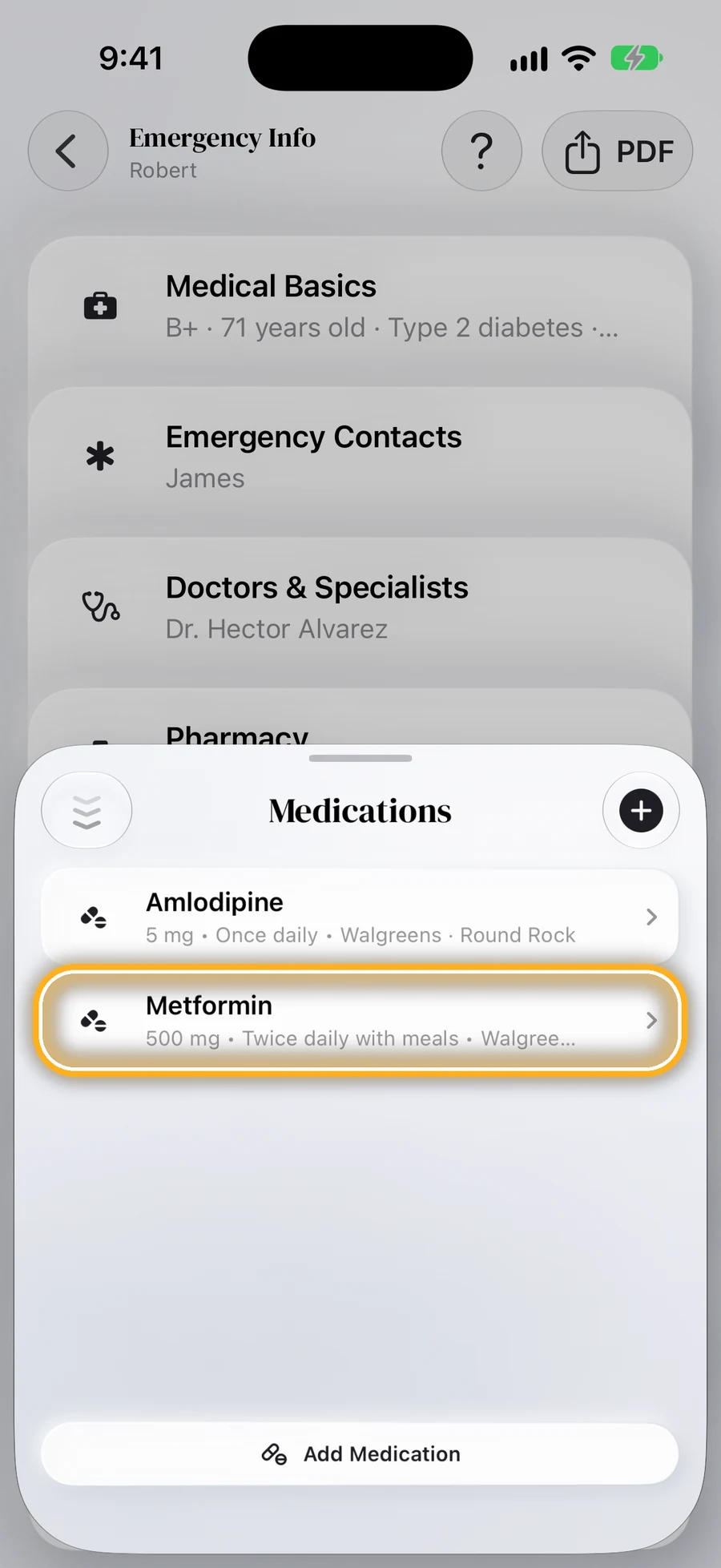
Step 1: What he takes now, in one list
Open the person, tap Emergency Info, then Medications. Check the cabinet against this list before you throw anything out.
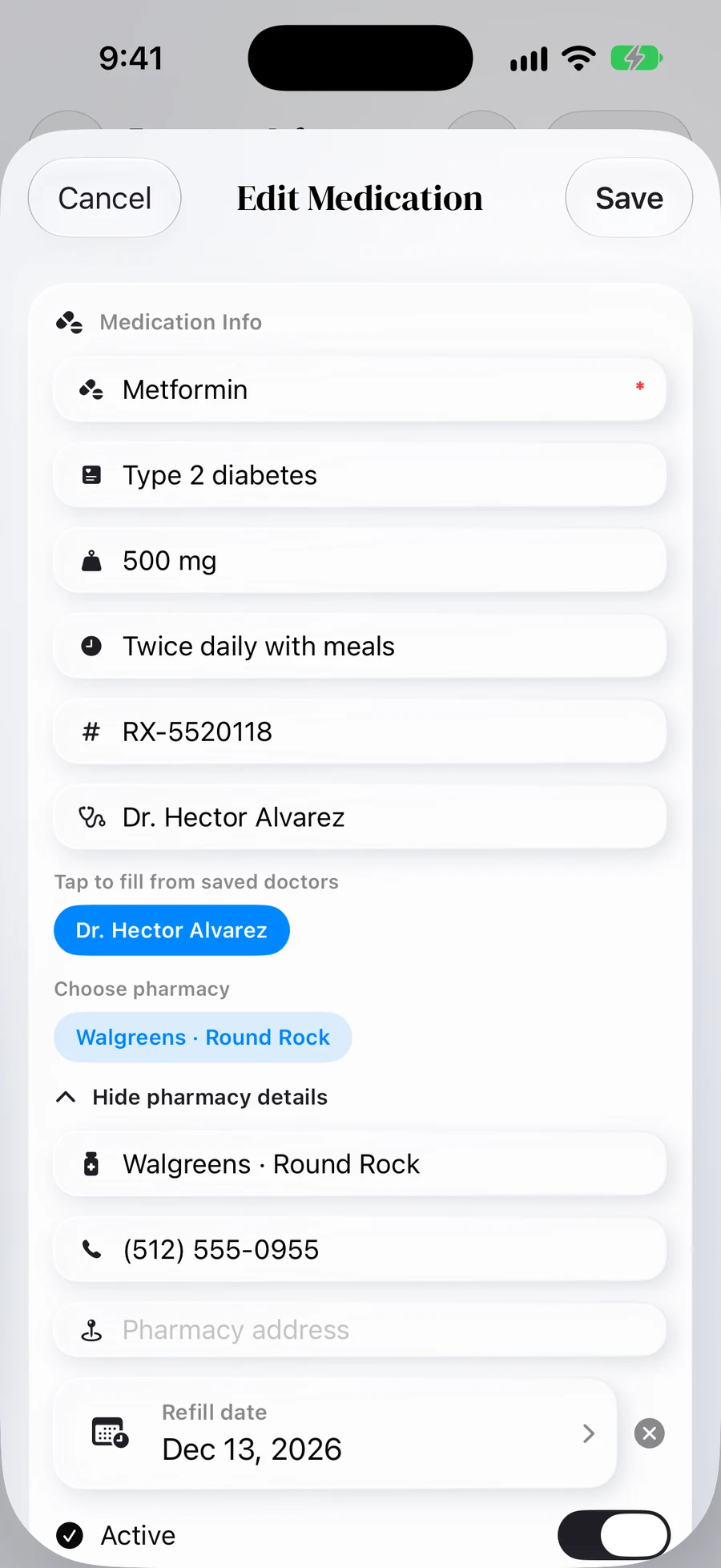
Step 2: Doctor stopped one? Turn off Active
Open the medicine and turn off Active. It moves to Past medications, so you still know what he used to take. It drops off the emergency PDF, and its refill reminder stops.
Use the notes box to write down when it stopped, and where the leftovers went.
Quick questions
- What is the best way to get rid of old medicine?
- A drug take-back option: a drop-off box or kiosk, often at a pharmacy or police station, a take-back day event, or a prepaid mail-back envelope. The FDA says this is the best way for most medicines.
- Can I throw medicine in the trash?
- Yes, if there's no take-back option and the medicine isn't on the FDA flush list. Take it out of the bottle, mix it with coffee grounds, dirt or cat litter, seal it in a bag or can, and put it in the trash.
- Which medicines can be flushed?
- Only the ones on the FDA flush list, mostly strong opioid pain medicines like oxycodone, hydrocodone, morphine and fentanyl patches, and only when you can't get to a take-back option soon. Don't flush anything else.
- What do I do with a parent's medicines after they die?
- If hospice or a home care team was involved, ask them first. Otherwise, use a take-back option, or the flush list and trash steps at home. Scratch out the name and prescription number on the empty bottles.
- How do I get rid of needles and inhalers?
- Put used needles in a sharps container right away, then follow your city or county's rules for dropping it off. For inhalers, ask your trash and recycling service, because they can be dangerous if punctured or burned.
Read next
Sources
- FDA: Where and how to dispose of unused medicines
- FDA: Drug disposal questions and answers
- FDA: The flush list for certain medicines
- FDA: Best way to get rid of used needles and other sharps
This page is general information, not medical advice. If a label or your pharmacist gives other directions, follow those.
A clear cabinet, and a list that's true.
KinLine is free to start. No account, no sign-up.


Free to download · No account needed