























Guide for caregivers · About 5 minutes
Choosing assisted living for a parent
It's one of the hardest choices a family makes, often in a hurry. Here's how to look, what to ask, and what to have ready for the move.
By the KinLine team · Updated
1. Start with what they need
What help do they need now, and what might they need later: help with daily tasks, nursing care, therapy, or a memory care unit? And what matters to them: the food, activities, faith, or being close enough for family to visit? Their doctor can help with the first part.
2. Ask around, then call
Ask friends, doctors and social workers about places they know. Then call a few: ask what it costs, how many people live there, and whether there's a waiting list.
3. Visit, then visit again
On the first visit, look for:
- Medicare and Medicaid certification, and a state license
- Easy to get around for someone in a wheelchair or walker
- Residents who look well cared for
- Staff who are warm and respectful with residents
- A clean, fresh-smelling, well-kept building
Medicare's Nursing Home Checklist is handy to bring. Then go back without calling ahead, on a different day, at mealtime.
4. Questions to ask
- How many caregivers are there for each resident? What training do they have?
- How long have the director and the heads of nursing and food worked here?
- Does a doctor check on residents? How often?
- What activities are there on weekdays and weekends? Can we join one?
- Is there a safe place to go outside?
- How do residents get to their medical appointments?
- Is there a memory care unit for people with dementia? What does it offer?
- What's included in the price, and what costs extra?
5. Costs and the contract
Get the full price in writing and ask what Medicare, Medicaid or long-term care insurance will cover. Read the contract slowly, ask about anything unclear, and read it again before signing.
Where to get help
- Eldercare Locator: 800-677-1116
- Your local Area Agency on Aging
- LongTermCare.gov
- Medicare's Care Compare tool, to compare nursing homes
Have their information ready for move-in day
Here's Robert, 71, from our sample family.
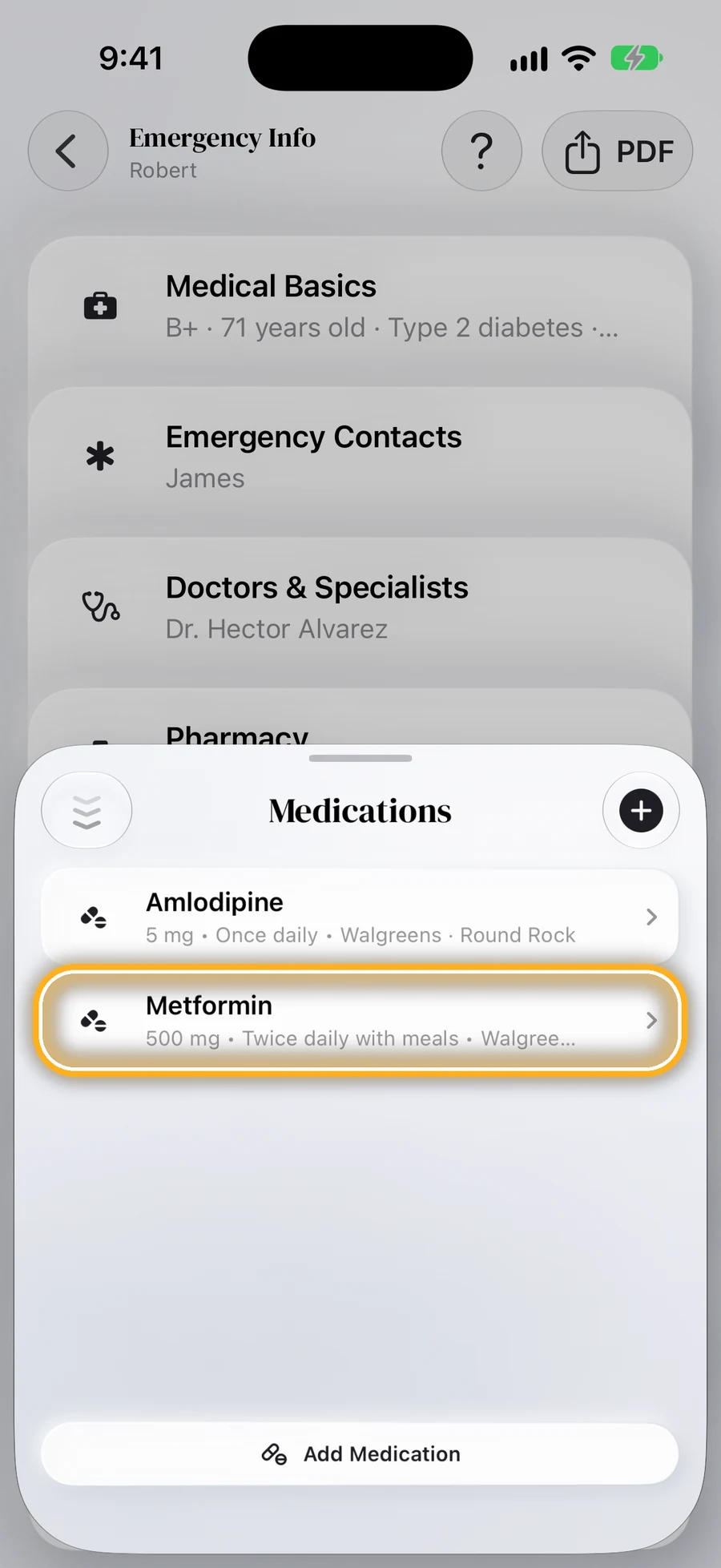
Step 1: Their medicines, all in one list
Open your parent, tap Emergency Info, then Medications. Show it to the nurse at intake.
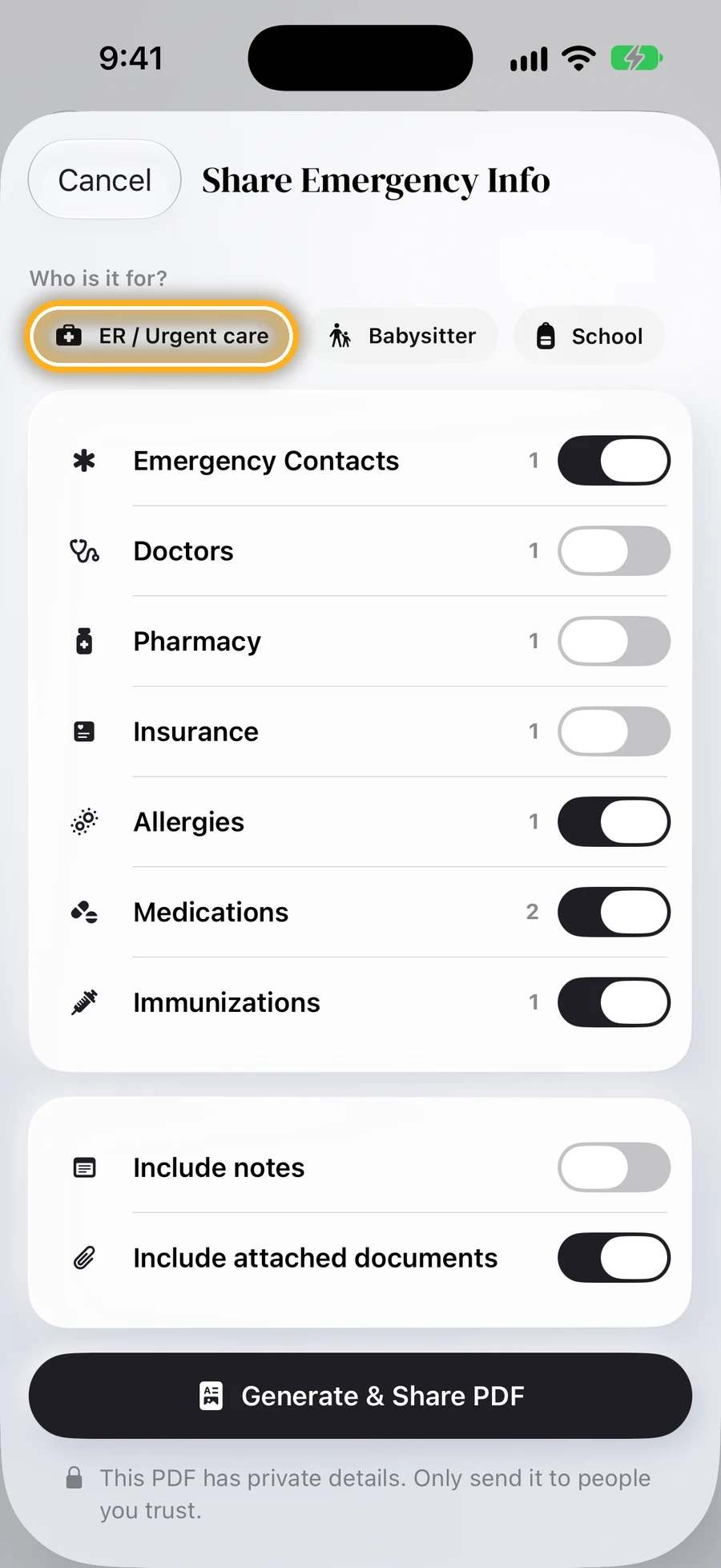
Step 2: A one-page summary for the staff
On iPhone, tap PDF in Emergency Info for a page with their conditions, allergies, medicines, doctors and contacts.
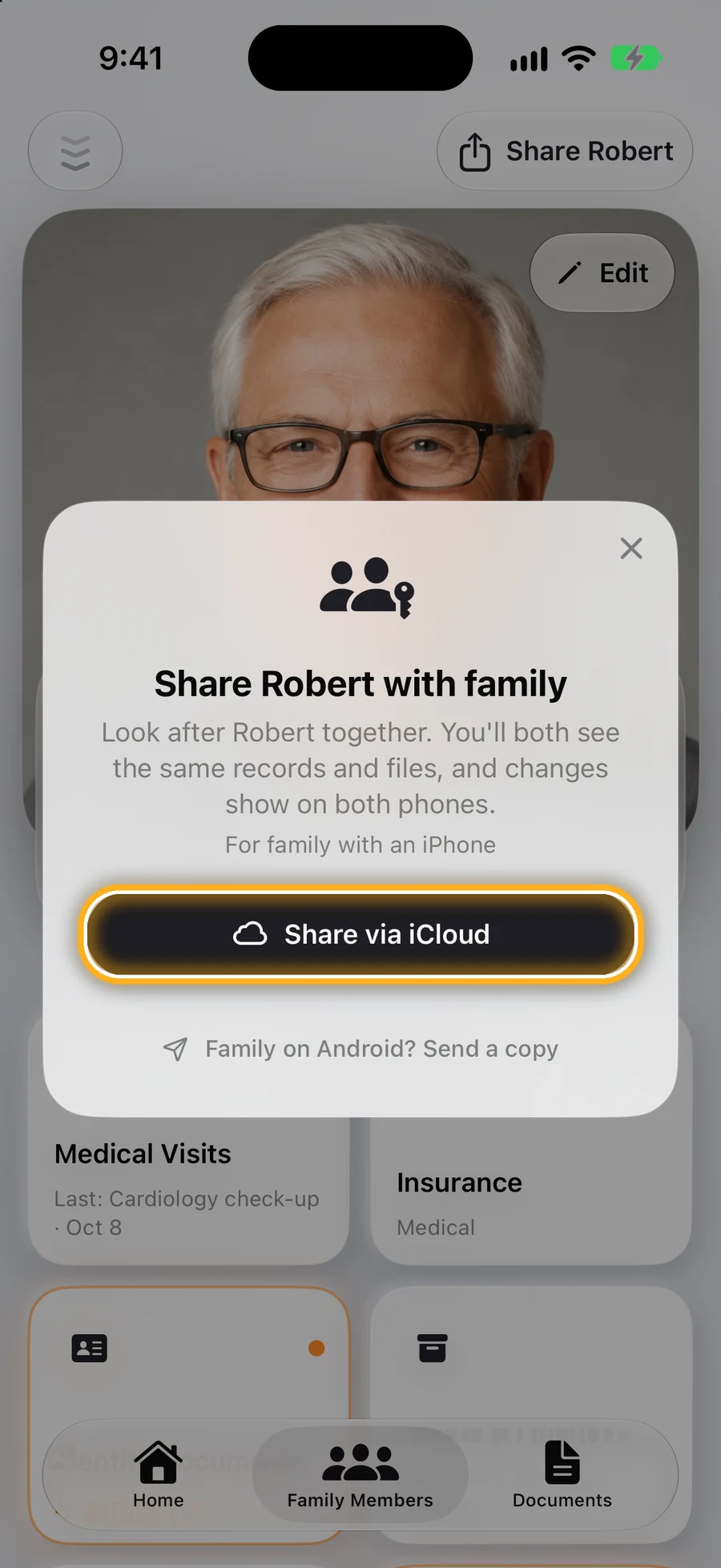
Step 3: Keep brothers and sisters in the loop
On iPhone, tap Share, then Share via iCloud, so the whole family sees the same records.
Quick questions
- Where do I start looking?
- Call the Eldercare Locator at 800-677-1116 or your local Area Agency on Aging. Medicare's Care Compare tool lets you compare nursing homes near you.
- How many places should we visit?
- Several. Then go back to your favorite without calling ahead, at a different time, ideally at a meal.
- Does Medicare pay for assisted living?
- Ask each place what Medicare, Medicaid or long-term care insurance will pay. Many have a financial office that can help. You can also call Medicare at 800-633-4227.
- Should we sign the contract on the spot?
- No. Read it carefully, ask about anything unclear, and read it again before you sign.
Read next
Sources
This page is general information, not medical, legal or financial advice.
Take your time where you can. Ask everything.
KinLine is free to start. No account, no sign-up.


Free to download · No account needed