


















Real life · About 5 minutes
Flu shot season: when to get your flu shot
Flu season in the US usually runs through fall and winter, and it's most often at its worst between December and February. CDC says the best time for a flu shot is September or October, ideally by the end of October. Missed that? It's not too late. CDC says keep getting vaccinated as long as flu is going around.
By the KinLine team · Updated
When to get the flu shot, month by month
- July and August: too early for most adults, especially 65 and older, and in the first or second trimester of pregnancy. The protection can fade before winter. Children who need two doses should start now. So can people who can't come back later.
- September and October: the best time for most people. Ideally, everyone is done by the end of October.
- November and later: not too late. CDC says keep vaccinating all through the season, as long as flu is spreading and there's vaccine.
It takes about two weeks after the shot to build protection, so don't wait for the first cough in the house. You can get one at a doctor's office, a pharmacy, a health department or an urgent care clinic, and some schools and workplaces offer them too.
When is flu season?
In the United States, flu season usually runs through fall and winter. Flu is around all year, but it most often peaks between December and February. Over about 40 years of CDC records, February was the peak month most often, followed by December, January and March.
Going south of the equator? There, flu season runs about April to September, so a trip in July can still be in flu season.
What's new for 2026-27
- Same advice as last year. CDC says last season's flu shot recommendations stay in place for 2026-2027.
- Every flu vaccine is three-in-one, protecting against two type A viruses and one type B.
- A new shot every year. Protection fades, and the viruses change, so last year's shot doesn't cover this year.
- Nasal spray at home: FluMist can be given by adults 18 to 49 to themselves, or by a parent or caregiver to children 2 to 17, through the FluMist Home program.
Who needs one
CDC says everyone 6 months and older should get a flu vaccine every season, with rare exceptions. It matters most for people at higher risk of serious illness. Babies younger than 6 months are too young for a flu shot.
Kids who need two doses
Some children from 6 months through 8 years need two doses this season, at least four weeks apart. It depends on what they've had before:
- Two or more flu doses in past seasons (any seasons, not only last year): one dose this year.
- Fewer than two, or nobody knows: two doses. Get the first one as soon as you can.
- Turning 9 between doses? Still get both.
This is where a written record saves a trip. If you're not sure, pull up your child's shot records, or start a free printable vaccination record for each child.
Good to know
- 65 and older: CDC prefers high-dose, recombinant or adjuvanted vaccines. Any age-appropriate one is fine if those aren't available.
- Pregnant: a flu shot is recommended. In the third trimester, getting it in July or August can protect the baby for the first months after birth. Don't use the nasal spray while pregnant.
- Nasal spray: an option for many people 2 through 49, but not with some health conditions.
- Egg allergy: any vaccine that's right for their age and health is OK.
- Can the shot give you the flu? No. Side effects like a sore arm, a headache or feeling tired are usually mild and short.
Who's had theirs, and who's next
Here's our sample family.
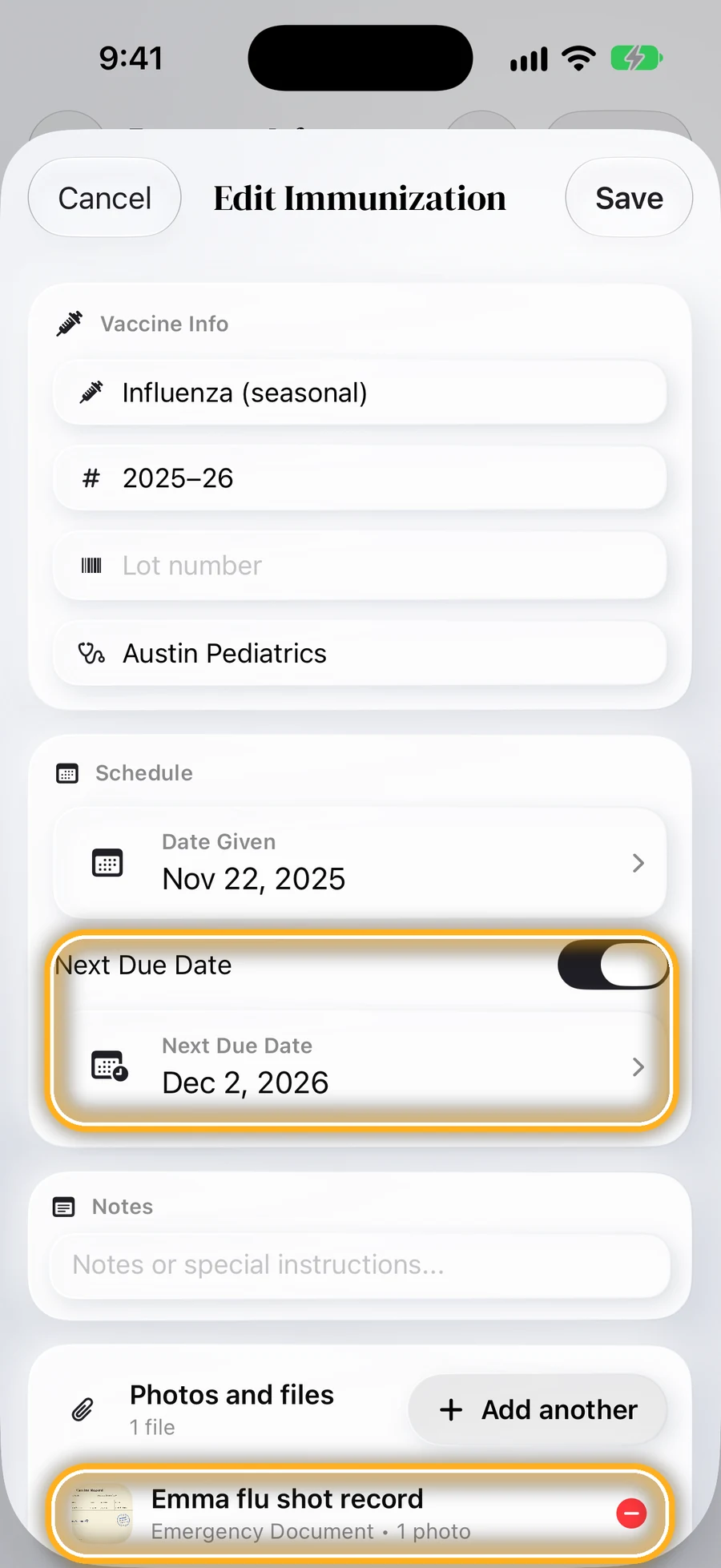
Step 1: This year's shot, with the next one due
Add the shot in Immunizations with a photo of the paper. Set a next due date, and it shows on Home before it's due.
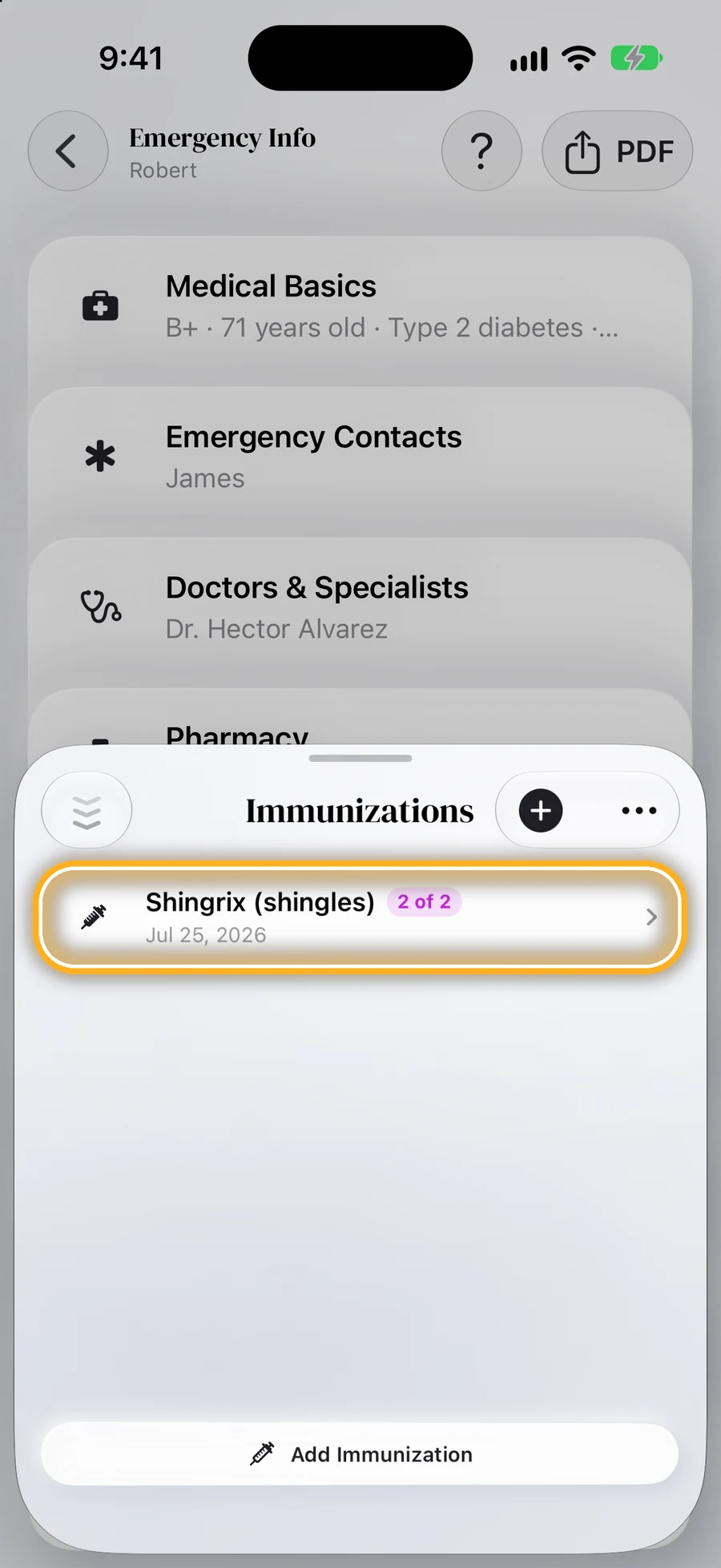
Step 2: Grandpa's shots too
Every person has their own list, with each dose and date.
Quick questions
- When is flu shot season?
- September and October are the best months for most people, ideally done by the end of October. Vaccine can be out as early as July or August, and CDC says to keep getting it all through the flu season as long as flu is going around.
- When is flu season in the US?
- Usually fall and winter. Flu is most often at its worst between December and February. In the Northern Hemisphere, flu activity runs about October to May.
- Is it too late to get a flu shot in November or December?
- No. CDC says vaccination should continue after October and all through the flu season, as long as flu viruses are spreading and there's vaccine. It takes about two weeks to start protecting you, so sooner is better.
- Is August too early for a flu shot?
- For most adults, yes, especially people 65 and older and anyone in the first or second trimester of pregnancy, because protection can fade before the season ends. Children who need two doses should start as soon as vaccine is available.
- Who should get a flu shot?
- CDC says everyone 6 months and older, every season, with rare exceptions. Babies younger than 6 months are too young.
- Why does my child need two doses?
- Children 6 months through 8 years need two doses, at least four weeks apart, if they haven't had at least two flu doses before, or if nobody knows. Kids who had two or more doses in earlier seasons need just one. That's why the shot record matters.
- Is there a different flu shot for older adults?
- Yes. For people 65 and older, CDC prefers three vaccines: high-dose, recombinant and adjuvanted. If none is available, any age-appropriate flu vaccine is fine.
- Can someone with an egg allergy get a flu shot?
- Yes. CDC says people with an egg allergy can get any flu vaccine that's right for their age and health.
Read next
Sources
- CDC: Interim clinical considerations for seasonal flu vaccines, 2026-2027
- CDC: Key facts about seasonal flu vaccine
- CDC: Who needs a flu vaccine
- CDC: Flu season
This page is general information, not medical advice. Ask your doctor or pharmacist which vaccine is right for each person.
Everyone's shot, in one list.
KinLine is free to start. No account, no sign-up.


Free to download · No account needed