





















Guide for caregivers · About 4 minutes
Getting an older parent ready for an emergency
When a storm or fire hits, older adults often need more help: medicines, devices, a ride out. A plan made now, with the right people in it, makes all the difference.
By the KinLine team · Updated
1. Know what could happen
Find out which disasters are likely where they live, and whether they'd need to leave or stay home. A weather radio, or the FEMA app with alerts for their address and yours, helps them hear in time.
2. Build a support network
- Family, friends, neighbors and people from their place of worship who can help.
- At least one person with a spare key, who knows where the supplies are and how to use their equipment or give their medicine.
- Someone who can drive them out if they need to leave.
- A plan for pets or a service animal.
3. Pack for their needs
- Medicines and medical supplies
- Batteries and chargers for hearing aids, phones and devices
- A way to bring a walker, wheelchair or other equipment
- Copies of their Medicare, Medicaid and other insurance cards
- Food and water for them, and for pets
4. A few things to set up now
- If they get dialysis or other regular treatment, ask the clinic about its emergency plan and backup places.
- Move benefit checks to direct deposit or a Direct Express card (800-333-1795). Mail can stop for weeks after a disaster.
- Practice the plan together, then look at it again every year.
Their information, with you wherever you are
Here's Robert, 71, from our sample family.
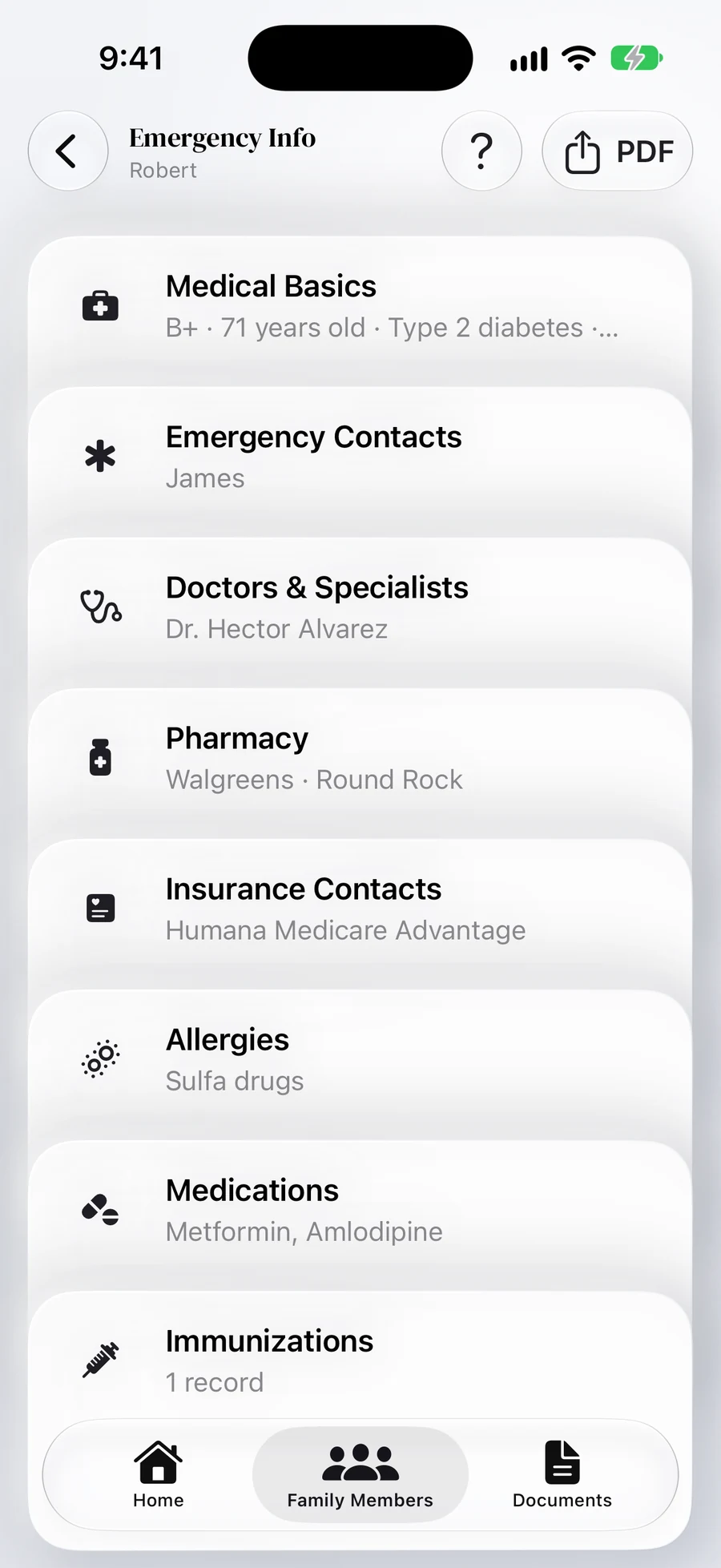
Step 1: Everything a helper needs, in Emergency Info
Conditions, medicines, allergies, doctors and emergency contacts, on one screen.
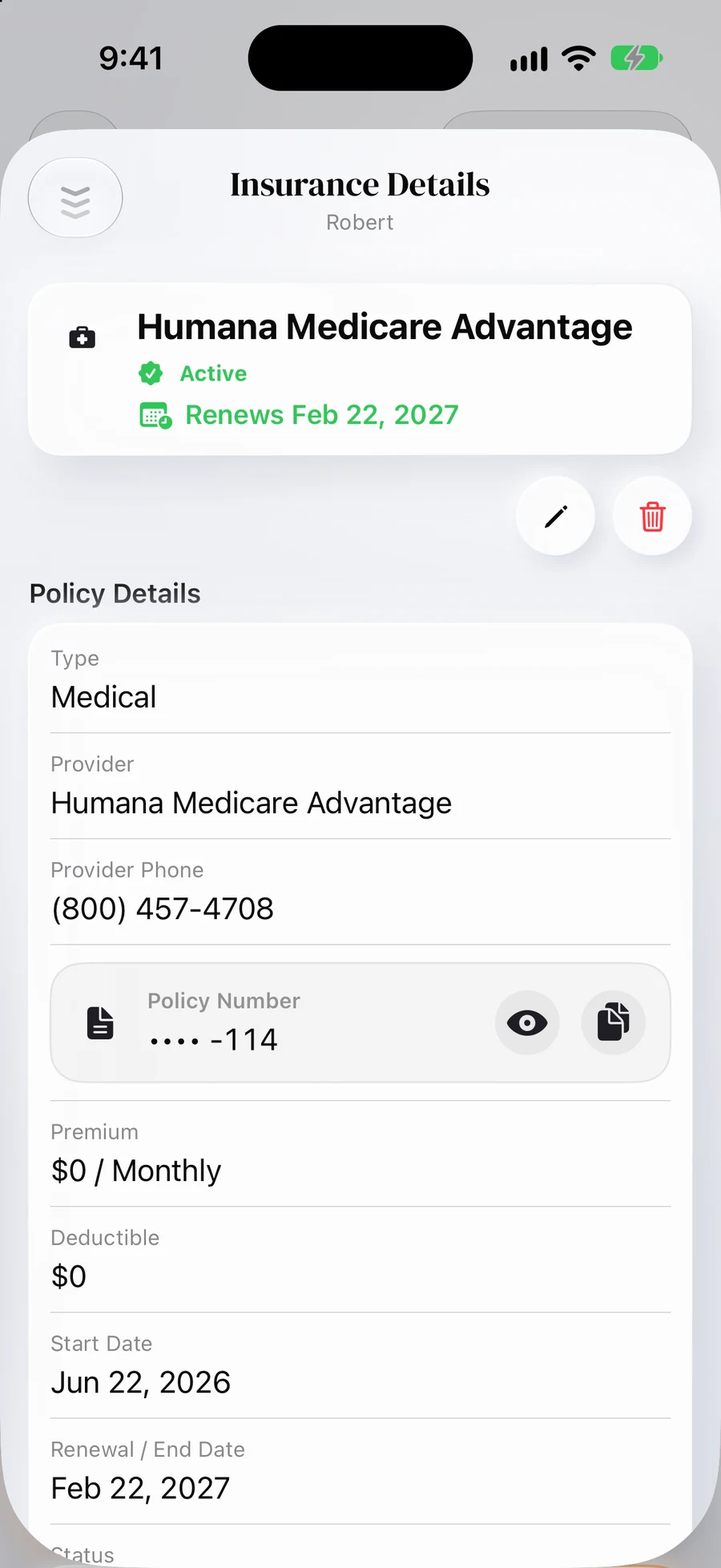
Step 2: Their insurance, without the paper card
Add each policy with its phone number and a photo of the card. You still have it if the wallet's left behind.
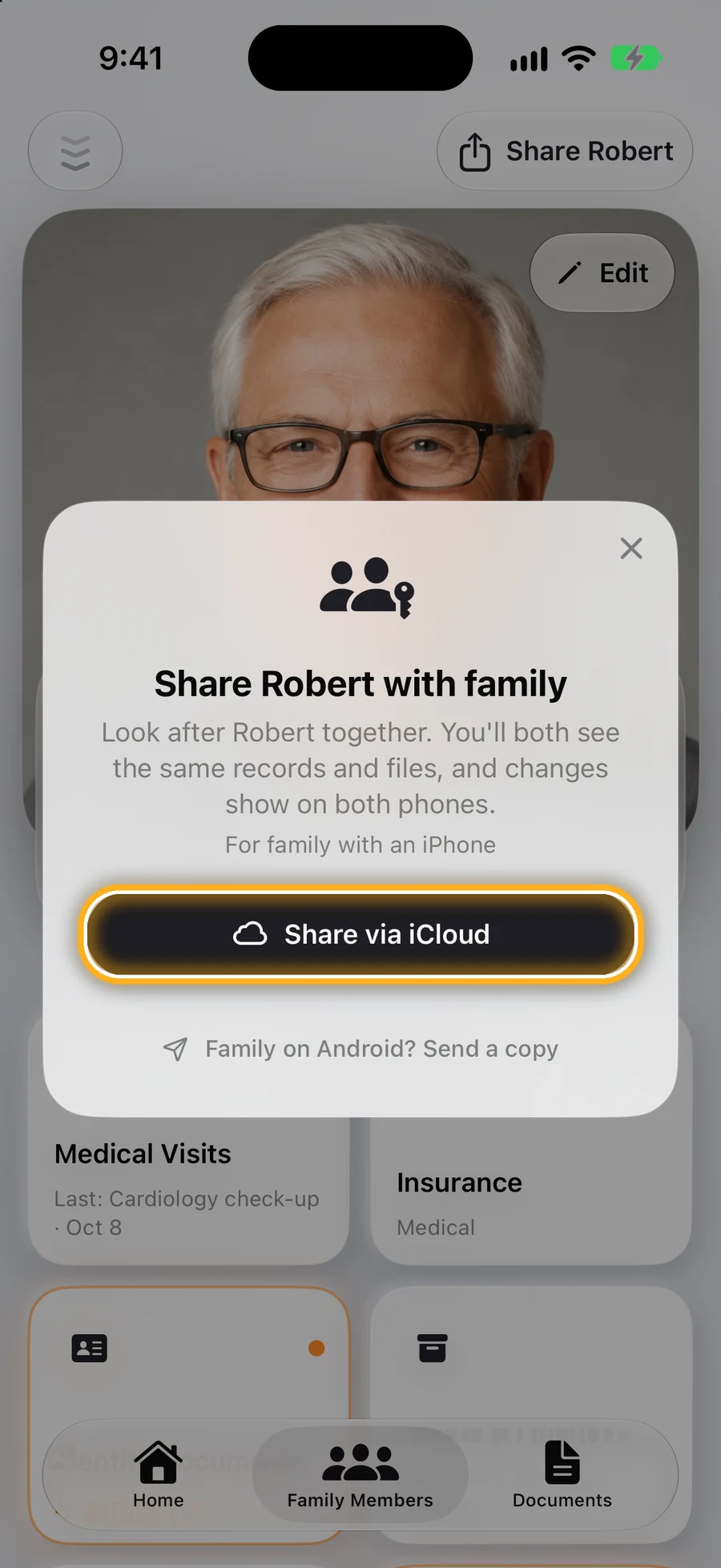
Step 3: The whole family sees the same plan
On iPhone, tap Share, then Share via iCloud, so brothers and sisters far away have it too.
Quick questions
- What should be in an older adult's emergency kit?
- The usual food, water and flashlight, plus their medicines, medical supplies, batteries and chargers for devices, and copies of their Medicare, Medicaid and other insurance cards.
- Who should be in their support network?
- Family, friends, neighbors, people from their place of worship, caregivers. At least one should have a spare key, know where the supplies are, and know how to use their equipment or give their medicine.
- What if they get dialysis or other regular treatment?
- Ask the clinic or hospital about its emergency plan, and which backup place to go to if it's closed.
- Should they still get paper benefit checks?
- Ready.gov suggests switching to direct deposit or a Direct Express card, because mail can stop for days or weeks after a disaster. Call 800-333-1795 to sign up.
Read next
Sources
This page is general information, not medical advice. Ask a doctor, nurse or pharmacist about your own situation.
Make the plan together, then check on it every year.
KinLine is free to start. No account, no sign-up.


Free to download · No account needed