


Guide for parents · About 4 minutes
What health information to give your child's school
Every fall, the school asks for the same things again. Here's what they need, what has to come from the doctor, and how to have it ready in a minute.
By the KinLine team · Updated
The checklist
- Emergency contacts: two or three people the school can reach, and who may pick your child up
- Your child's doctor and their phone number
- Allergies: what they're allergic to and what happens
- Medicines: anything taken at school, and anything taken at home the nurse should know about
- Health conditions like asthma, seizures or diabetes, with the care plan from the doctor
- Shot records: schools ask for proof when your child starts, and again at some grades
- Anything else: diet, limits on sports, glasses, hearing aids, an inhaler or other equipment
- A recent photo for an allergy plan
What has to come from the doctor
A care plan for a severe allergy, asthma or seizures is usually signed by your child's doctor, often every school year. Schools also tend to need their own medicine permission form before staff can give a medicine, even an EpiPen. Ask the school for its forms early: the doctor's office can take a while.
Got a food allergy? Read what to tell school and sitters.
Questions to ask the school
- Is there a nurse on site? Full-time or part-time?
- Who gives medicines when the nurse isn't there?
- Where is my child's medicine kept, and who can reach it?
- Who goes with my child on field trips and the bus?
Everything the school asks for, in one PDF
Here's Emma, 9, from our sample family. She has a severe peanut allergy.
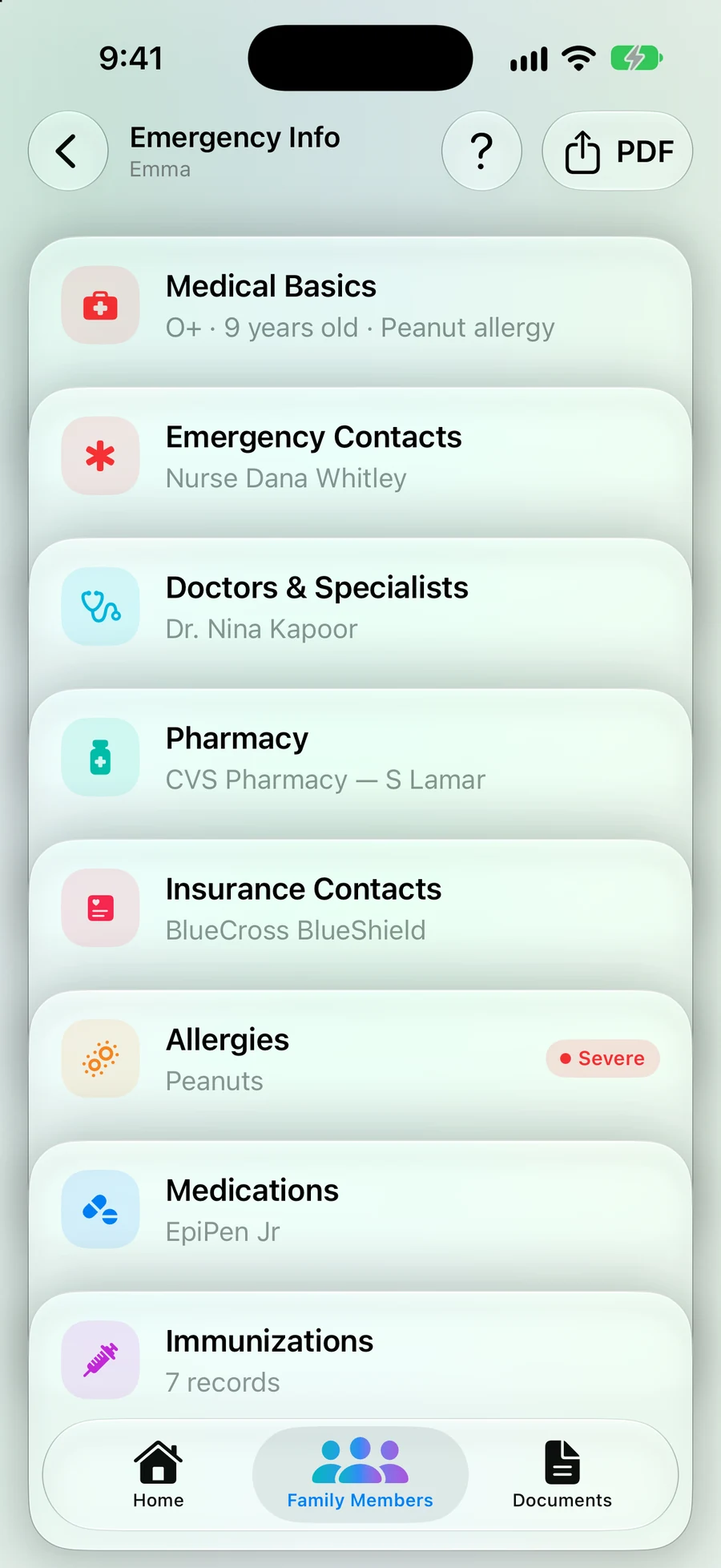
Step 1: Keep it in Emergency Info
Open your child and tap Emergency Info. Contacts, doctor, allergies, medicines and shots each have their own list.
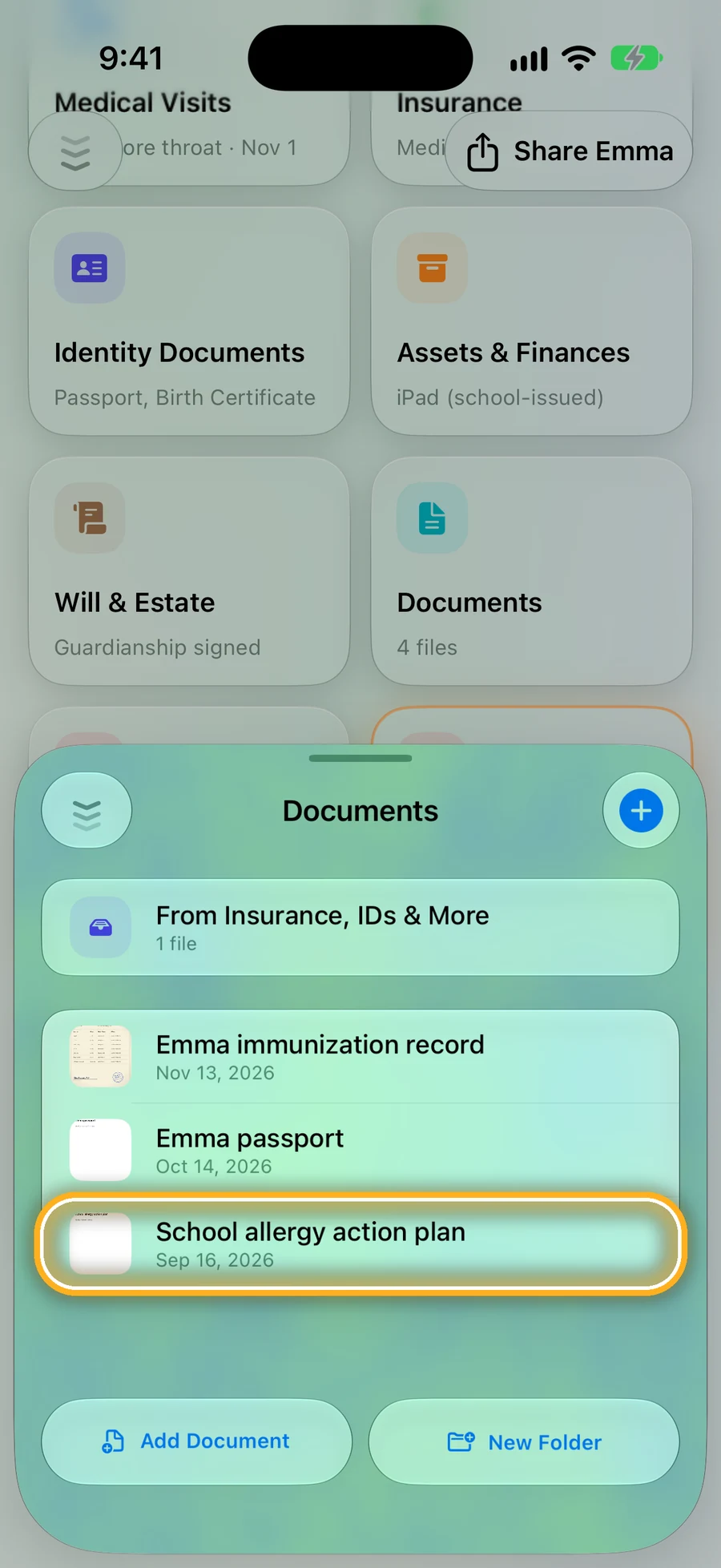
Step 2: Save the signed plan in Documents
Take a photo of the doctor's signed plan, so you can send it again next year or to a new teacher.
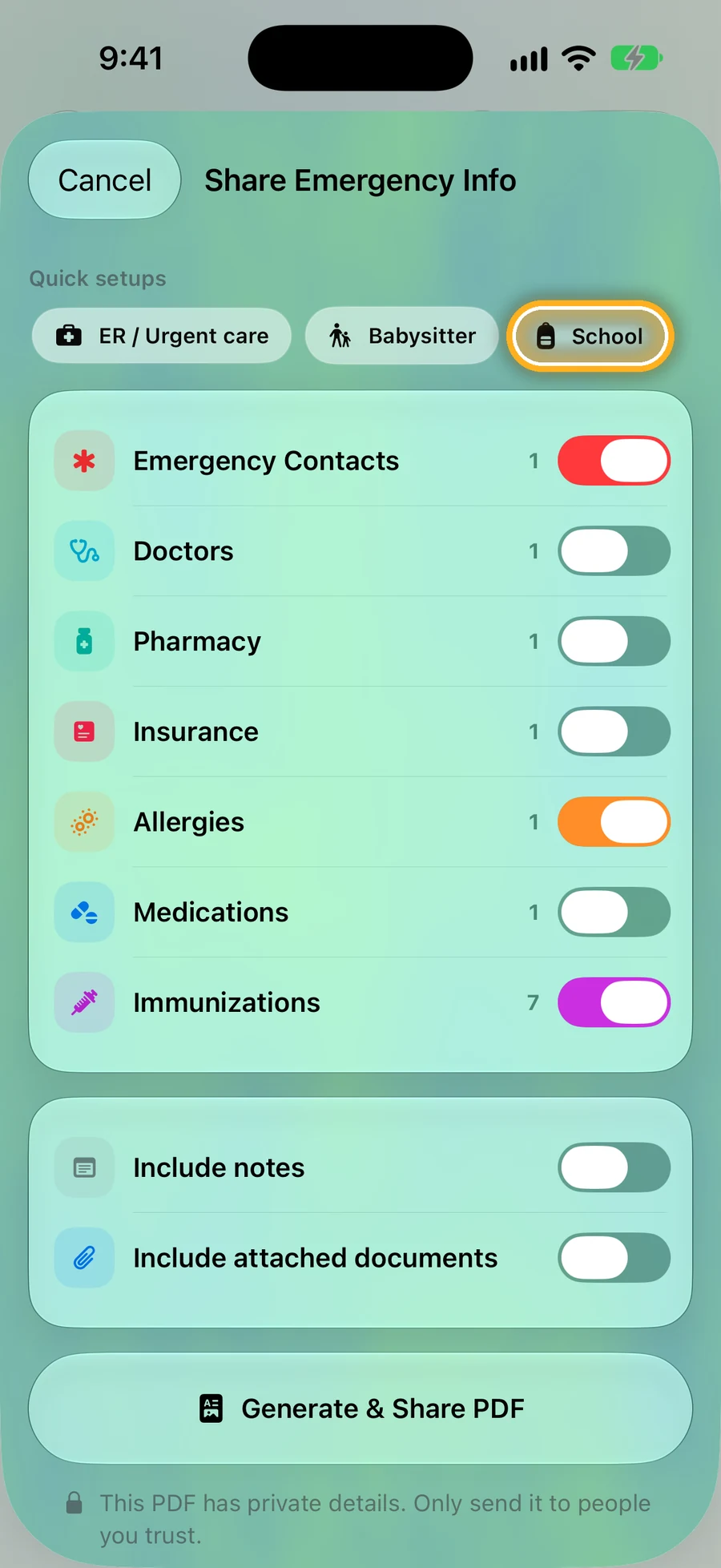
Step 3: Tap PDF, then School
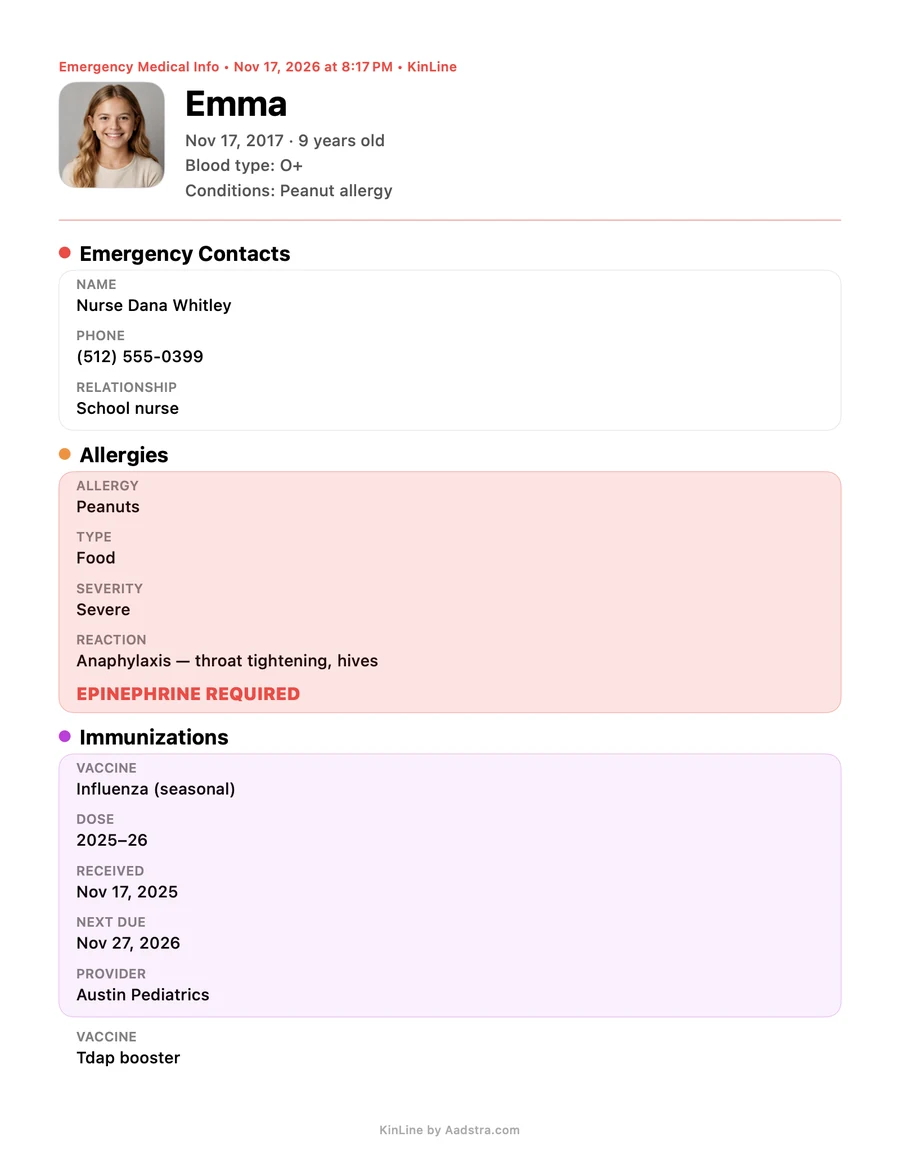
KinLine picks the emergency contacts, allergies and shots. Send it to the school nurse, or print it. On iPhone.
Quick questions
- Does every school have a nurse?
- No. The American Academy of Pediatrics notes that not every school has a nurse on site. Ask who gives medicines and who handles emergencies, so your child's plan is in the right hands.
- Does my child's allergy plan need a doctor's signature?
- Usually, yes. Food allergy experts recommend a plan signed by your child's doctor every school year. Many schools also need their own form before staff can give a medicine.
- How often should I update it?
- At the start of every school year, and any time a phone number, medicine or plan changes.
- Is this medical advice?
- No. Your child's doctor decides the care plan. This page is about getting the right information to school.
Read next
Sources
- AAP HealthyChildren: Medical emergencies at school
- FARE: Food allergy management in schools
- CDC: Managing food allergies in schools
This page is general information, not medical advice. Ask a doctor, nurse or pharmacist about your own situation.
Ready for school, every year.
KinLine is free to start. No account, no sign-up.


Free to download · No account needed